

Exploring Alishan’s Layered Landscapes
TEXT | AMI BARNES
PHOTOS | ALAN WEN, VISION
The Alishan National Forest Recreation Area is often hailed as Taiwan’s premier eco-tourism destination – and deservedly so. Its dual cultural and ecological richness means that if thinking of exploring the area itself or venturing into the wider surrounding Alishan National Scenic Area, travelers will discover no shortage of reasons to visit this beguiling region.
Imagine you were a benevolent travel god tasked with designing the perfect mountain-abode escape. What would you create? Perhaps you’d throw down a base layer of ancient woodland, adding variety with bamboo cathedrals and higgledy-piggledy tea farms stacked one atop the next. Threading through these, why not plot a century-old heritage railway, gentle boardwalks, and trails that chase ghost trains over moss-padded sleepers? You may also choose to swaddle the whole creation with an enchanting layer of mist and sprinkle a scattering of cozy cafés and teahouses where your appreciative subjects can sip a fortifying local cuppa or pot of joe. And the best part? This too-good-to-be-true destination isn’t fiction – you’ve just designed the Alishan National Scenic Area.
Content
Alishan Forest Railway
In 1899, surveyors tasked with cataloging the bounty of Japan’s new colony discovered a metaphorical gold mine hidden in the Alishan Mountain Range. These mountains were home to a primeval virgin forest full of giant cypresses, and hinoki (as the fragrant wood is known in Japanese) was precisely the kind of sturdy material needed to build an empire. There was just one problem: with over 2,000 meters of elevation gain from the west-side plains and a whole load of pesky peaks between these forests and the ports, extracting any of that lumber was not going to be smooth sailing.
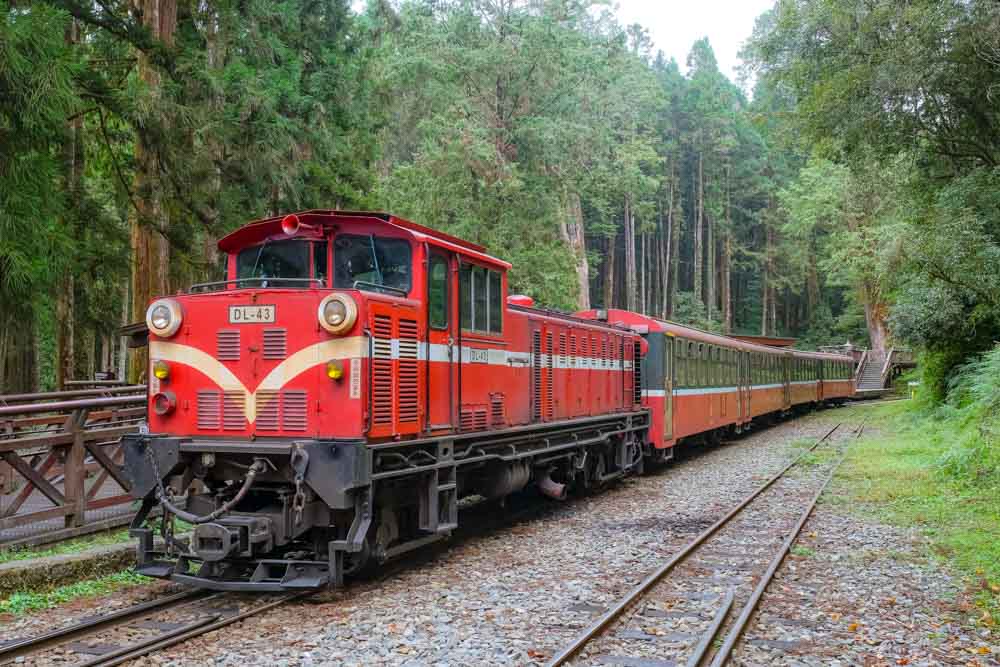
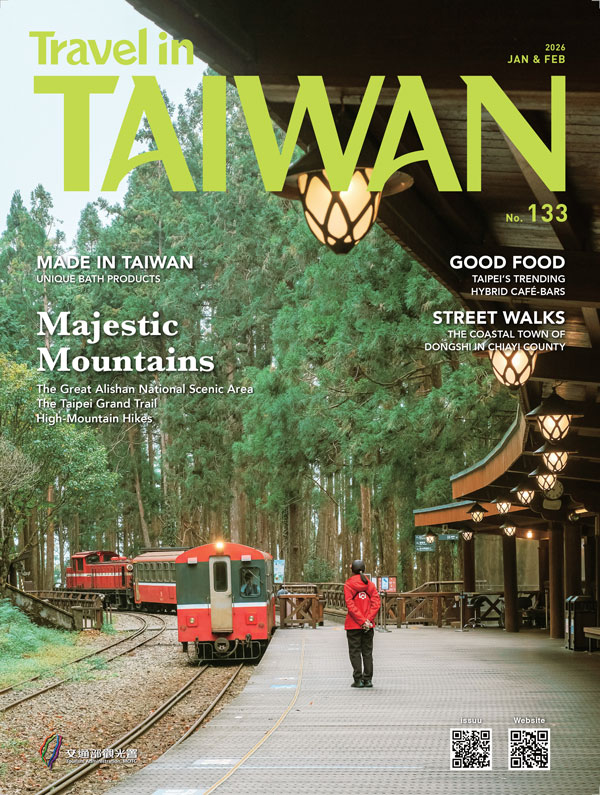
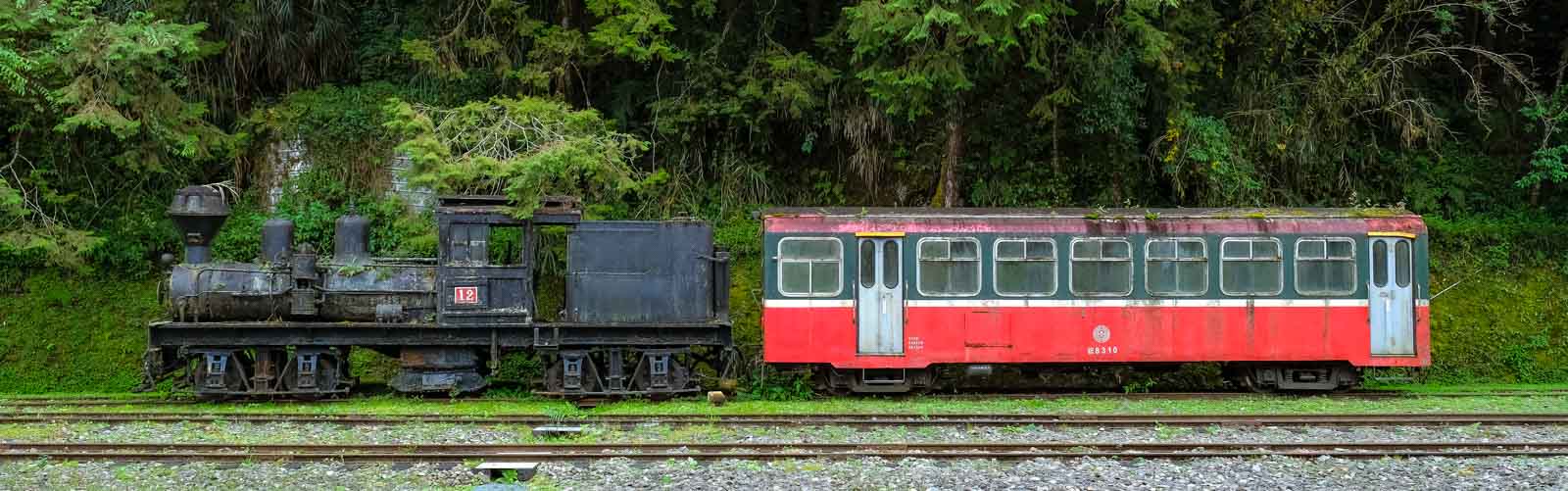
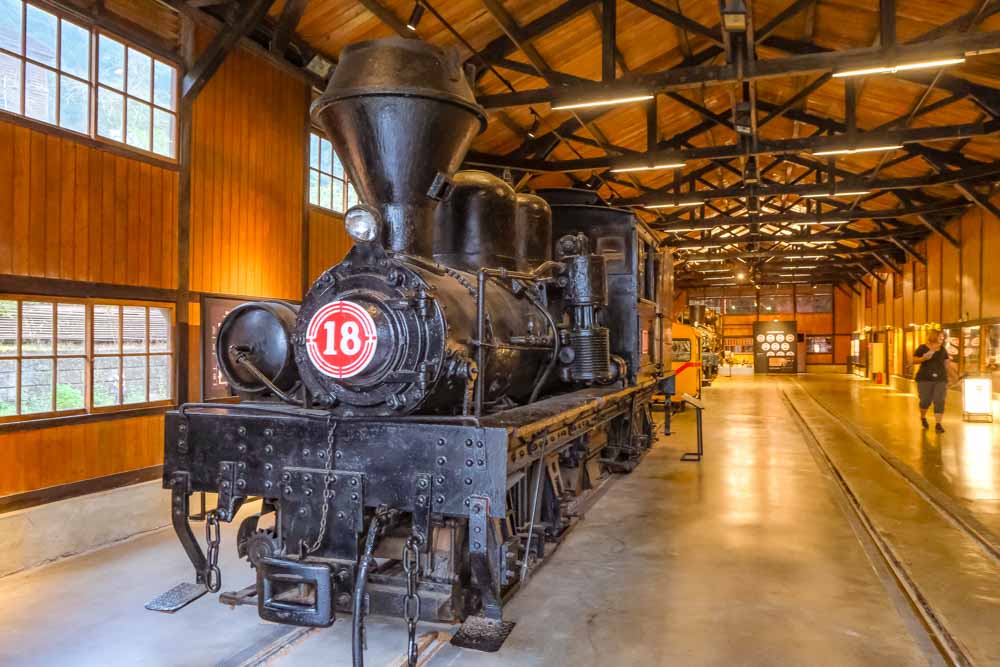
Enter the Alishan Forest Railway. Opened in 1912, it covers about 37 kilometers as the crow flies, but trains climbing the whopping 2,186-meter vertical differential between the two terminal stations travel over 70 kilometers of serpentine track, cross 77 bridges, plunge through 50 tunnels, pass 23 stations, climb several switchbacks, and shimmy round the world’s longest railway spiral. In its heyday, US-built steam-powered Shay locomotives – engineered to handle steep grades and tight curves – shuttled back and forth, extracting unimaginable volumes of precious timber. Commercial logging later slowed, but as the outbound flow of wood dwindled, diesel engines began bringing in the tourists, and those now-iconic red-and-white liveried workhorses still travel the rails today.
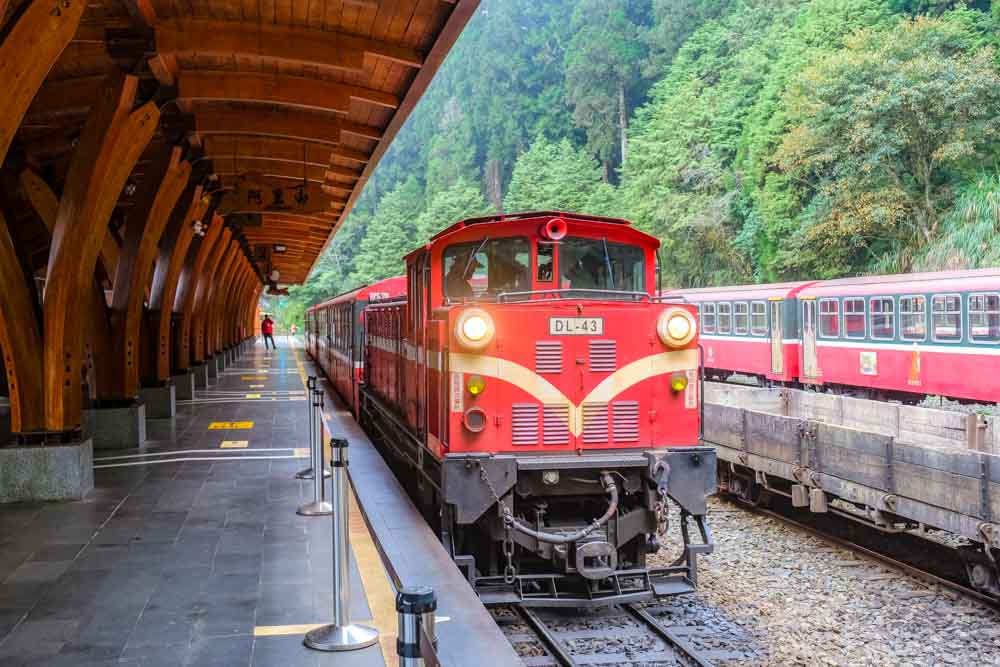
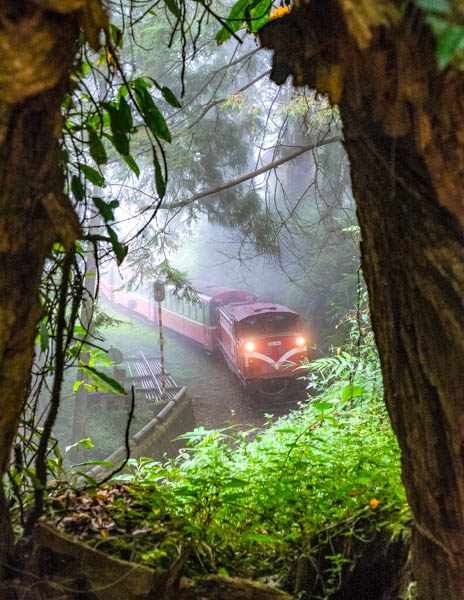
Starting off from Chiayi City (30m above sea level), the train trundles at a measured pace through sun-bleached farmland. Sugarcane and banana palms parallax past until, bit by bit, the plains give way to tropical greenery, the humid jungle breath permeating the carriage. As the engine begins climbing slightly, it grumbles, and the outside temperature dips. Subtropical vegetation interspersed with bamboo forest and mountain villages now lines the rails, and the shrill trills of white-eared sibia cut above the engine clamor.
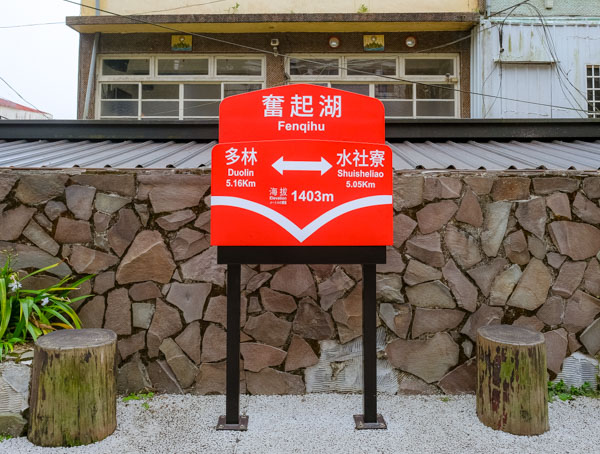
Fenqihu
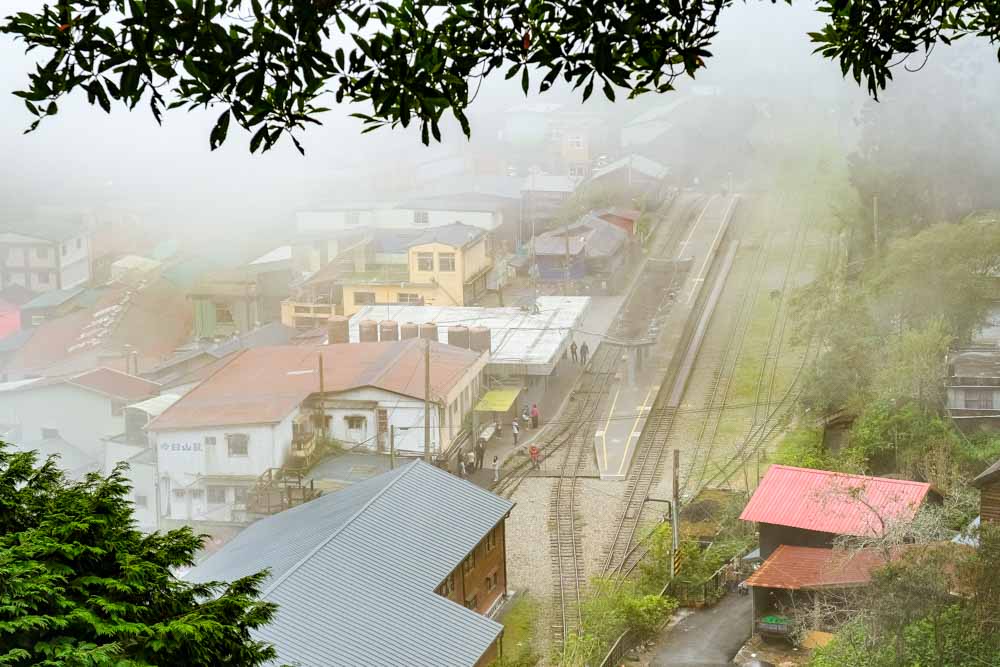
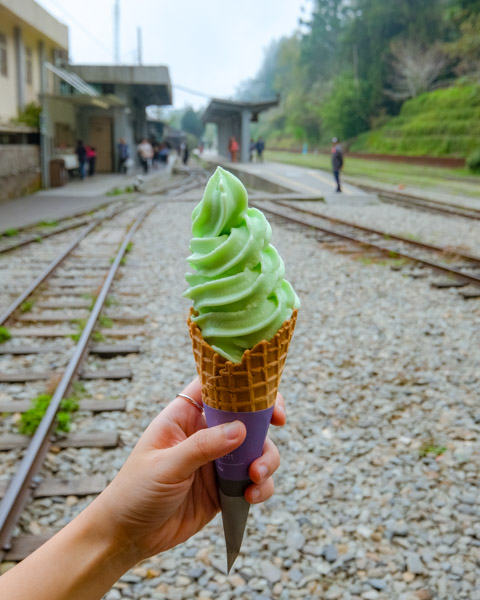
An hour-long pause at the village of Fenqihu (1,403m) allows passengers to alight for lunch (perhaps also a wasabi-flavored ice cream; wasabi is a local specialty crop), and then the train begins its final ascent through temperate forest. Now a noticeable 6-8 degrees Celsius cooler than down in the city, the air up here among the thick tree growth possesses a crisp clarity that causes sounds to hang and carry in odd ways – even the light seems somehow finer. It’s a journey I’ve made twice, and on both occasions, I’ve found myself lulled into a pleasant stupor by the rhythmic clacking and rolling, my attention escaping via the carriage windows to fly over the landscape like a tendril of mist. It really puts you in the right frame of mind to greet the forests when you get there.

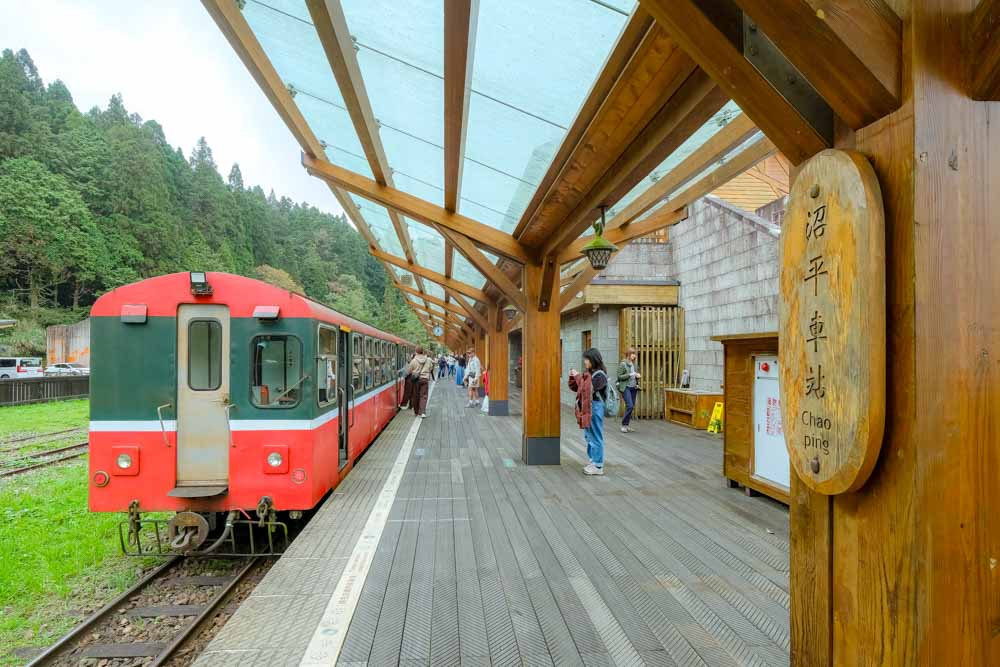
With that in mind, it’s worth saying that competition for the NT$600 one-way tickets is fierce. Seriously fierce. If you want to guarantee yourself a seat, the only way to do so is to be on the ball. Web reservations open at 6am Taiwan time, a fortnight ahead, and swift action is required – within minutes, every one of the 85 daily tickets gets snapped up. More flexible travelers have other options. Unclaimed tickets become available again three days out from the date of departure, and those who’re happy to fly by the seat of their pants might be able to snag a spot by turning up early on the day. And if, after all that, you’re still seatless, all is not lost. Taiwan Tourist Shuttle buses (www.taiwantrip.com.tw) can bring you to the forest recreation area, and once there, tickets for the Zhaoping/Zhushan (sunrise) and Shenmu branch lines can be bought at Alishan Station, and – thanks to a spot of ingenious camera rigging and a service cart – Google Street View now allows you to experience a driver’s-eye view of the whole journey from anywhere in the world.
For more info and tickets, visit: afrts.forest.gov.tw/TP01_1_E.aspx
| Obstacle-free Environment In recent years, many of Taiwan’s leisure facilities have been upgraded to better accommodate travelers with disabilities, and the Alishan National Forest Recreation Area is no exception. Sections of trails have been made barrier-free, while other adaptations – ramps, specially outfitted bathrooms, and wheelchair-friendly train stations and accommodation options – have been retrofitted to make the park increasingly accessible to those with disabilities, and later this year, a new premium Chiayi-Alishan train service with two dedicated wheelchair spaces will begin operation. |
Alishan Trails
Fenqihu, located in Zhuqi Township, within the Alishan National Scenic Area’s boundaries, is an important staging post for Alishan travelers. Formerly a sleepy hillside Hakka village, its position roughly halfway up the railway line meant it became the de facto lunch stop for workers shuttling between lumber mill and logging grounds, serving as a train service and maintenance depot. Today, tourists still flock to sample the traditional bento boxes and indulge in a spot of nostalgia.
Fenqihu Circular Trail
Train passengers will have time to have lunch and hit up the station-adjacent Fenqihu Old Street, but for travelers with a little longer, the Fenqihu Circular Trail offers a more in-depth introduction to the village and its surroundings.
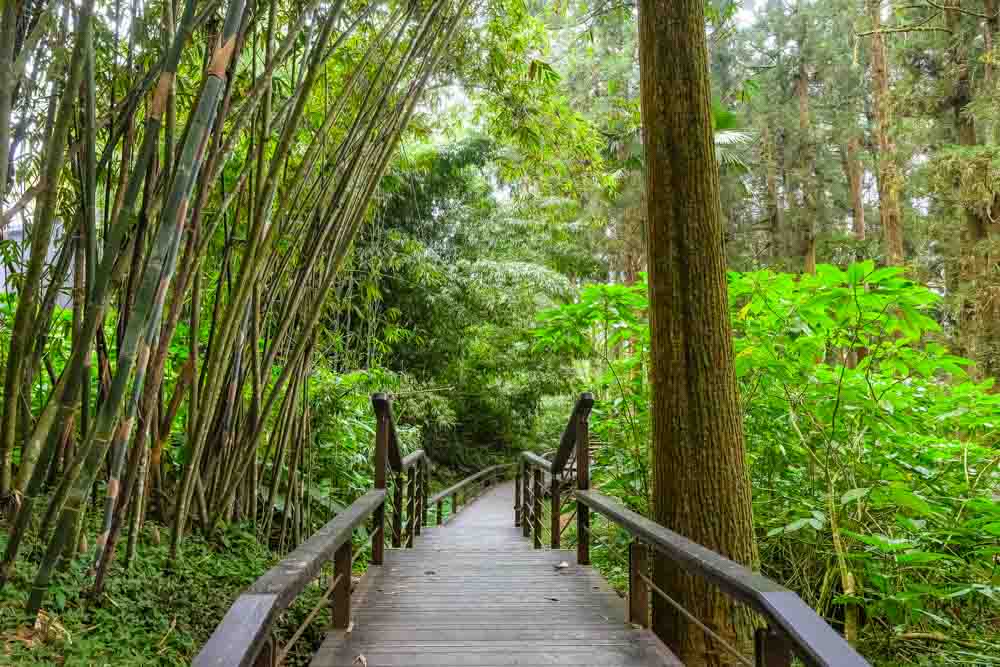
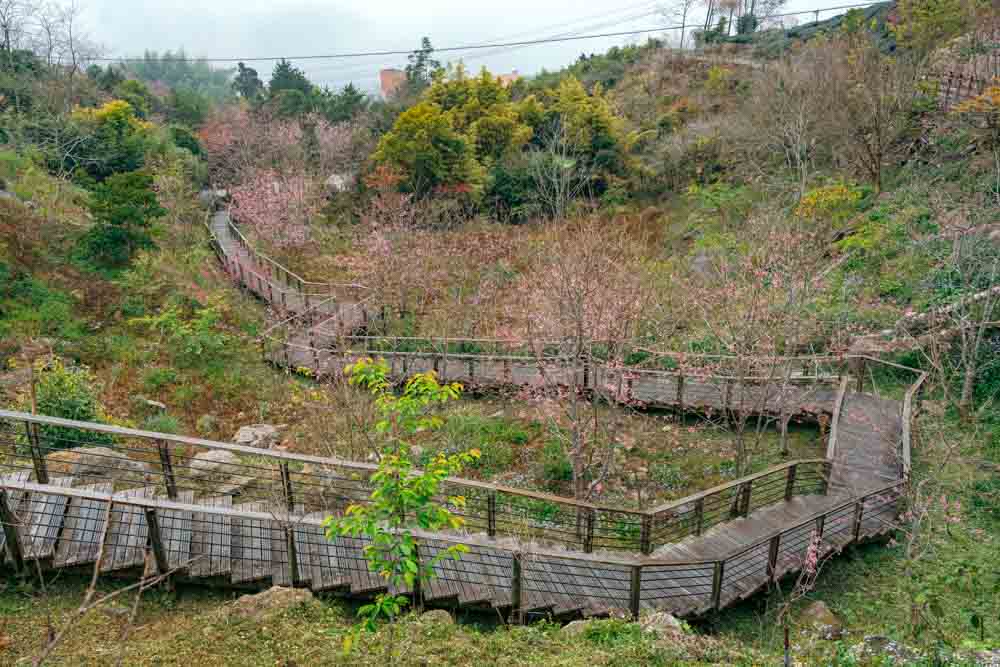
Woven together from several shorter trails, this 4-kilometer loop encircles the village via a series of boardwalks suspended above the forest floor. A dreamy landscape of moso bamboo dominates the northern, uphill portion, while the segment to the south passes through a wonderfully moody world of towering cedars with Taiwan liocichla (a small passerine bird) flitting heard but unseen through the underbrush. There’s even a small section where – at dusk – you can reliably spot fireflies year-round. Completing the entire loop takes 90-120 minutes, but if you find your energy flagging at any point, there are several shortcuts back into the village.
Shuishan Sacred Tree Trail
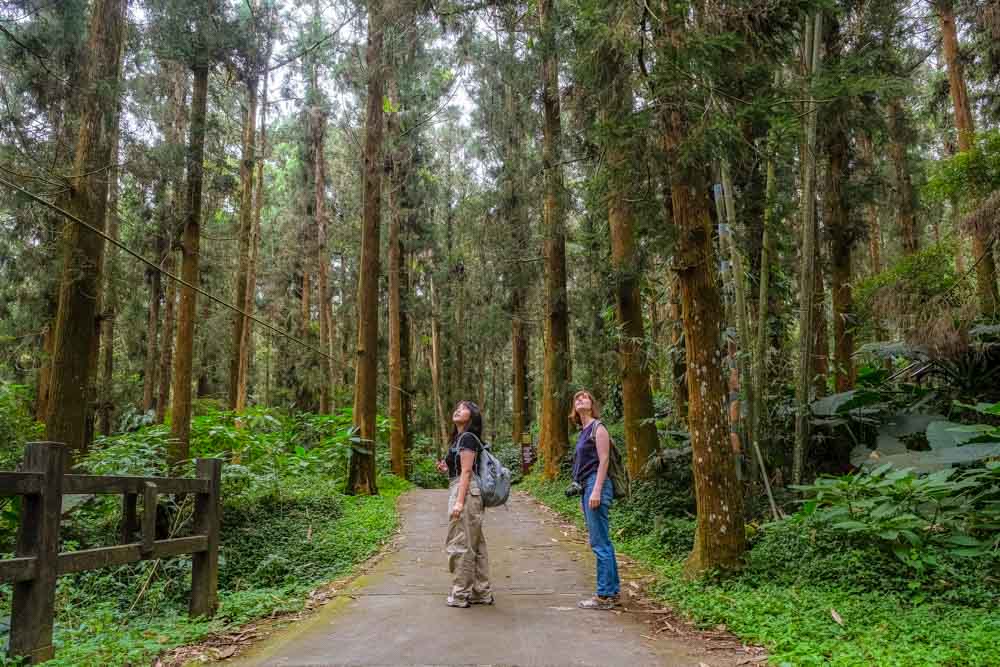
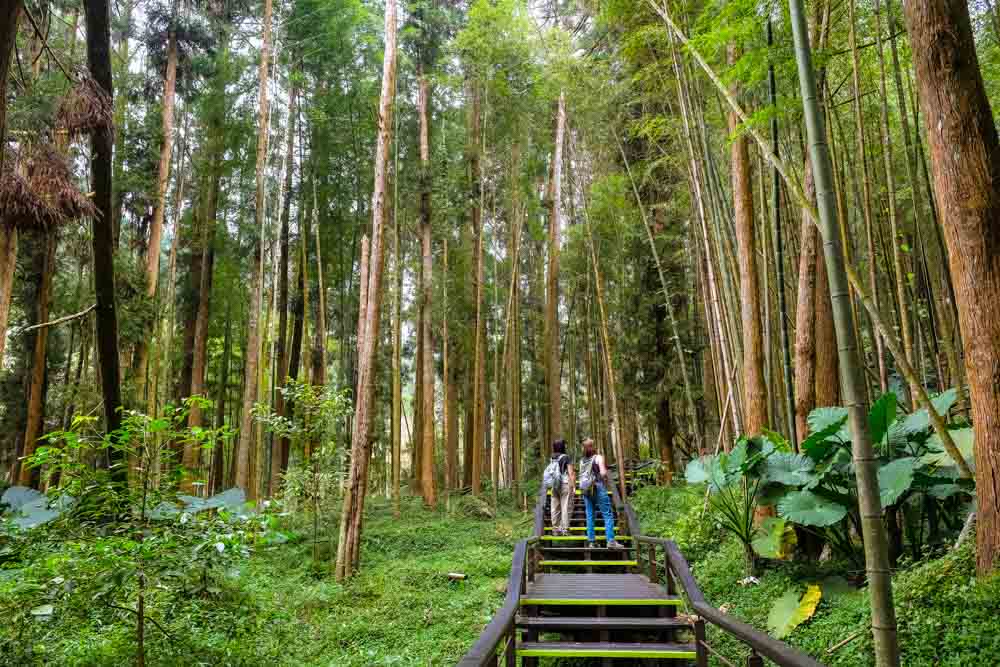
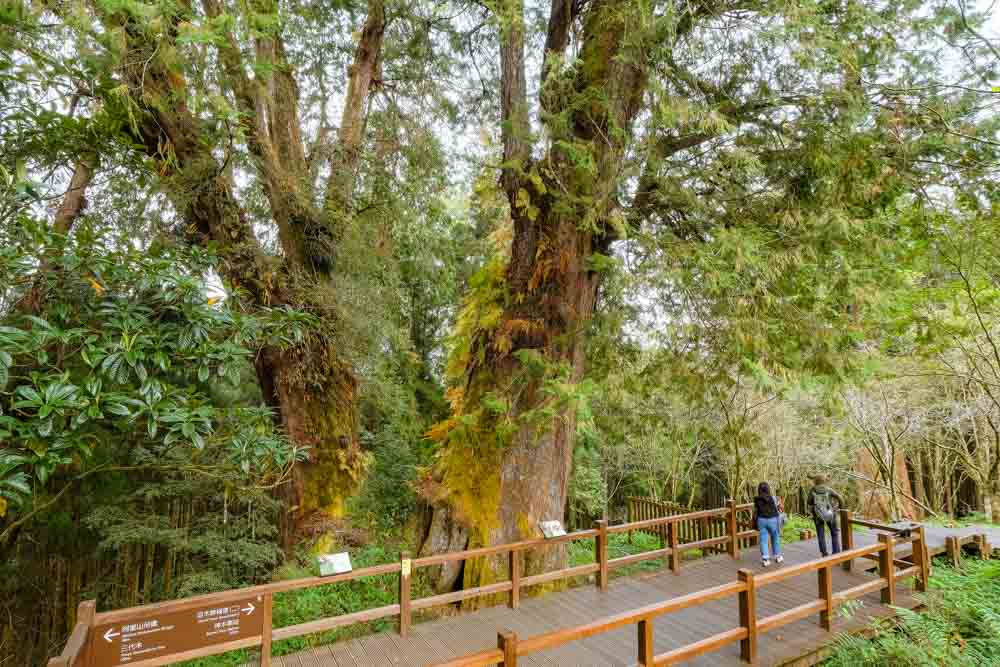
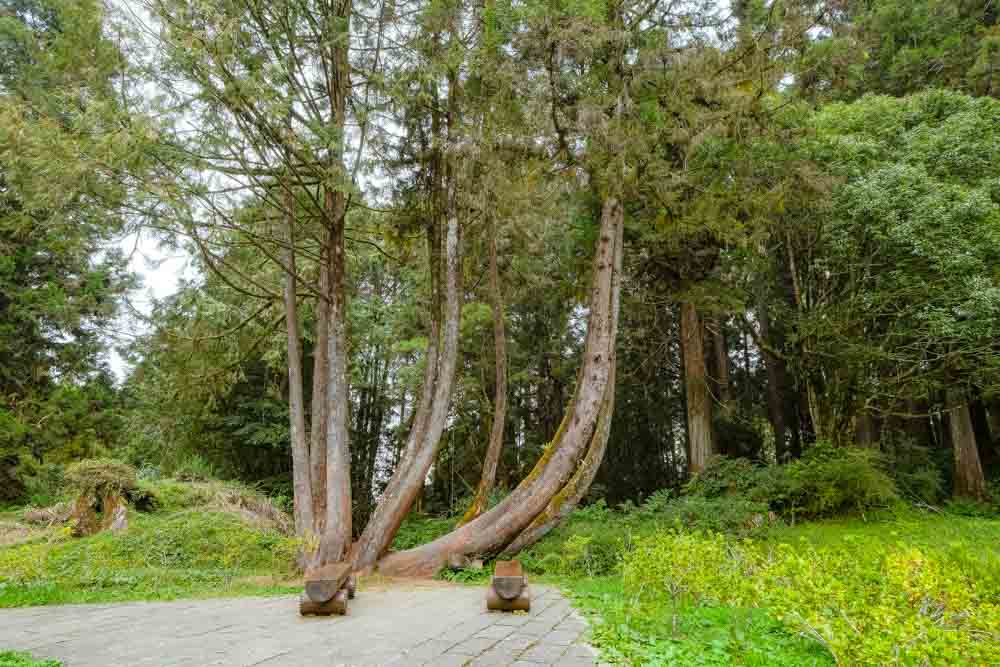
I could easily dedicate several articles’ worth of text to the Alishan National Forest Recreation Area’s trails. However, since space is limited, I’ll pick just one: the Shuishan Sacred Tree Trail. Named for the Formosan red cypress that sits along its length – a grand old dame that survived the woodchopper’s axe – the route was recently rechristened Shuishan Healing Trail, and is the first path in Taiwan to receive official designation as a forest therapy walk.
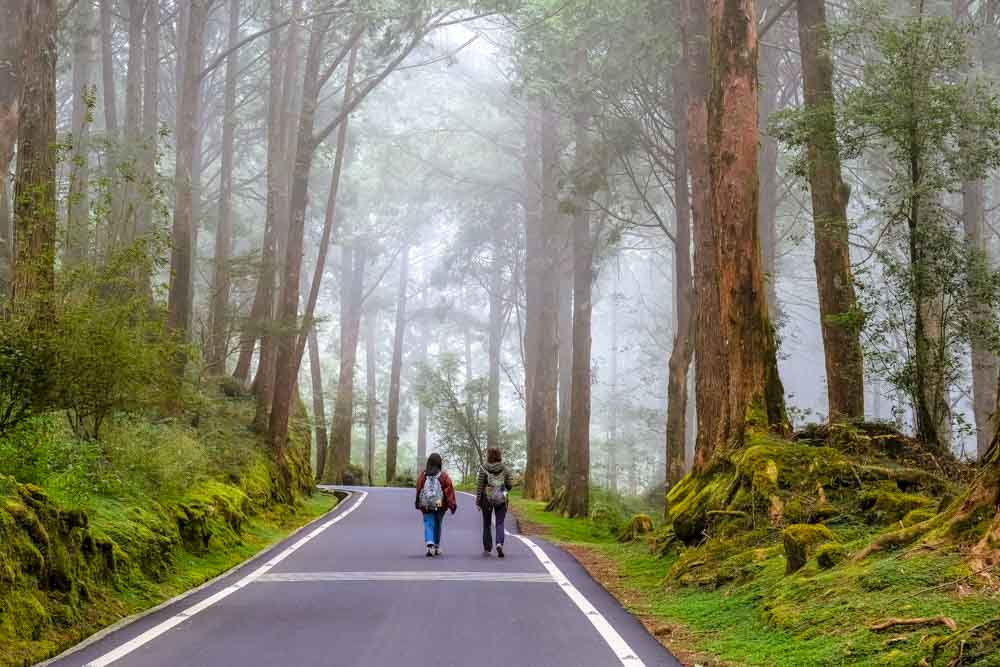
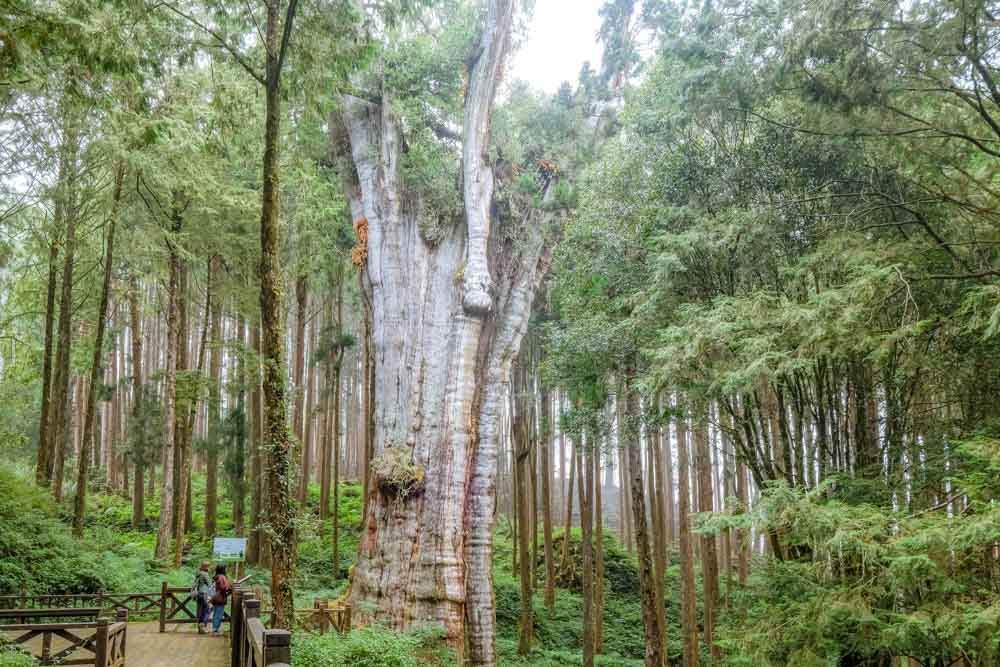
Starting two kilometers up the road to Zhushan Station from Alishan Station, it’s probably the quietest walk you can do in the park. Along the way, hikers are invited to listen to the forest’s song, lie down and watch the clouds scudding across a gap in the canopy, breathe deep lungfuls of phytonocide-rich air, and unburden their minds by whispering secrets to the trees. (If this sounds a touch crunchy for your liking, I’d say don’t knock it until you’ve tried it – we could all benefit from a little forest therapy from time to time.)
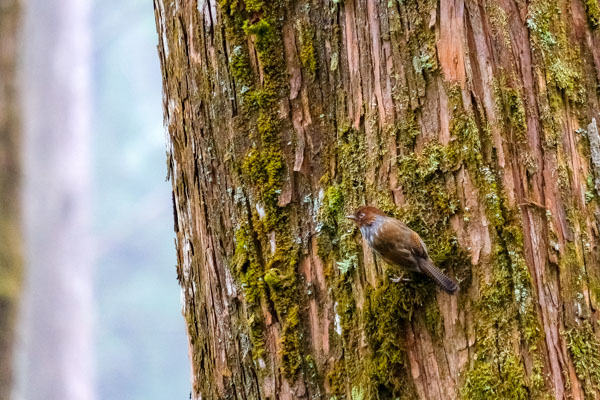
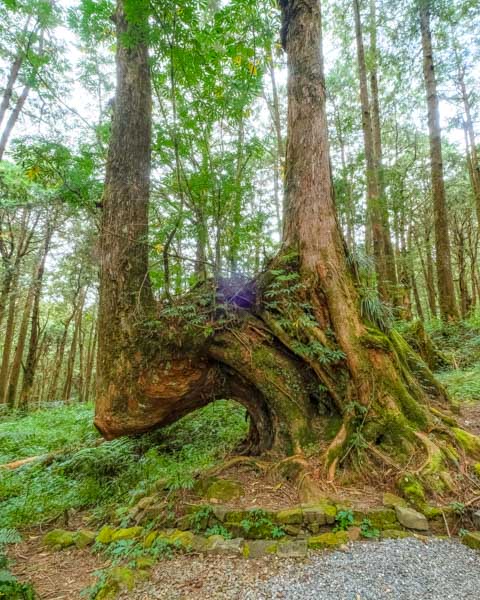
The trail doubles back along a stretch of the former Shuishan Line, one of 20-plus branch lines that once radiated from the main railway. With its trestle bridge and rusting rails, it’s a safe (and permit-free) version of the thrilling Mianyue Line trek, and on most afternoons, shafts of sunlight pierce the gathering mists to create a poetic interplay of light and shadow as exquisite as a Rembrandt painting.
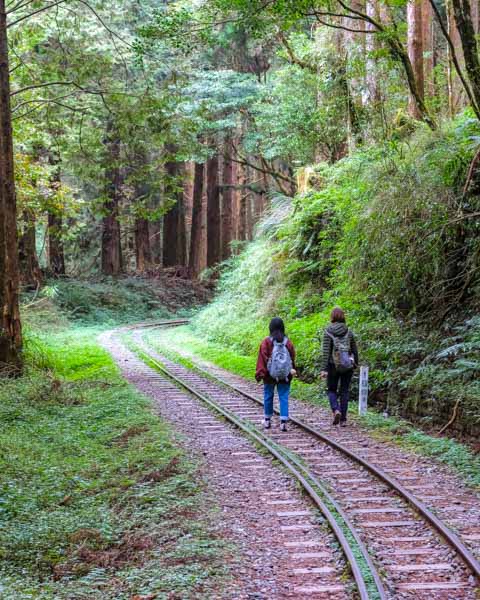
Forest Recreation Area Trails
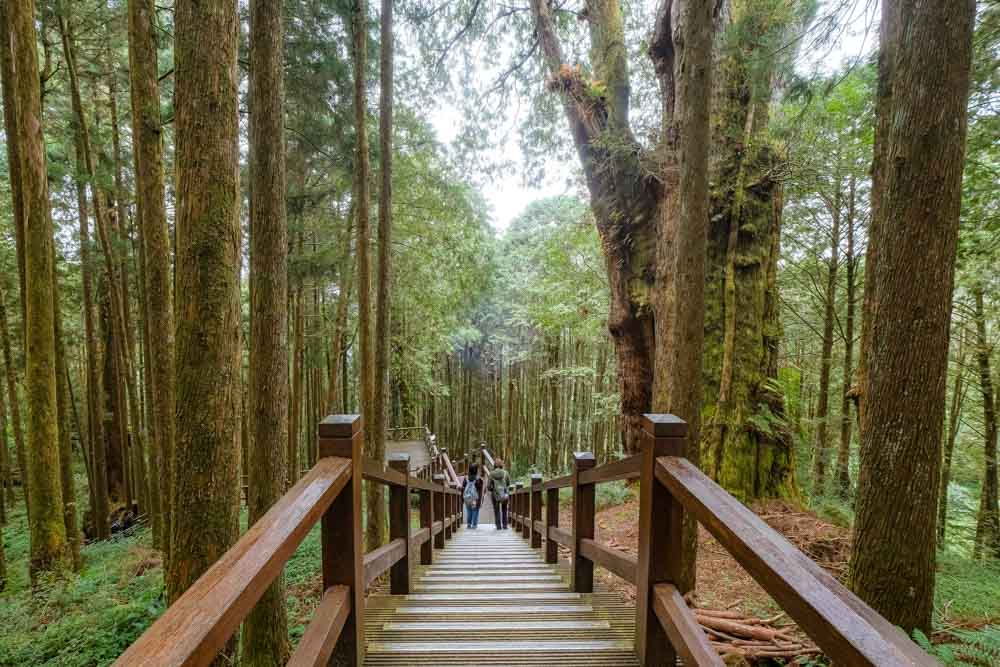
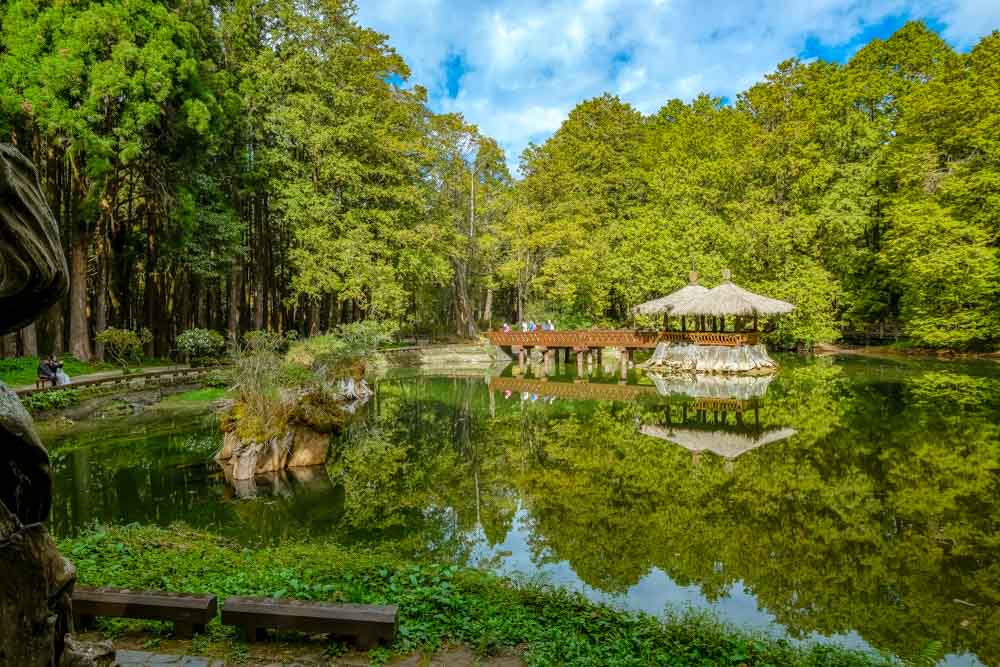
The main trails in the forest recreation area are easy to follow and take visitors through a wonderful forest of old trees.
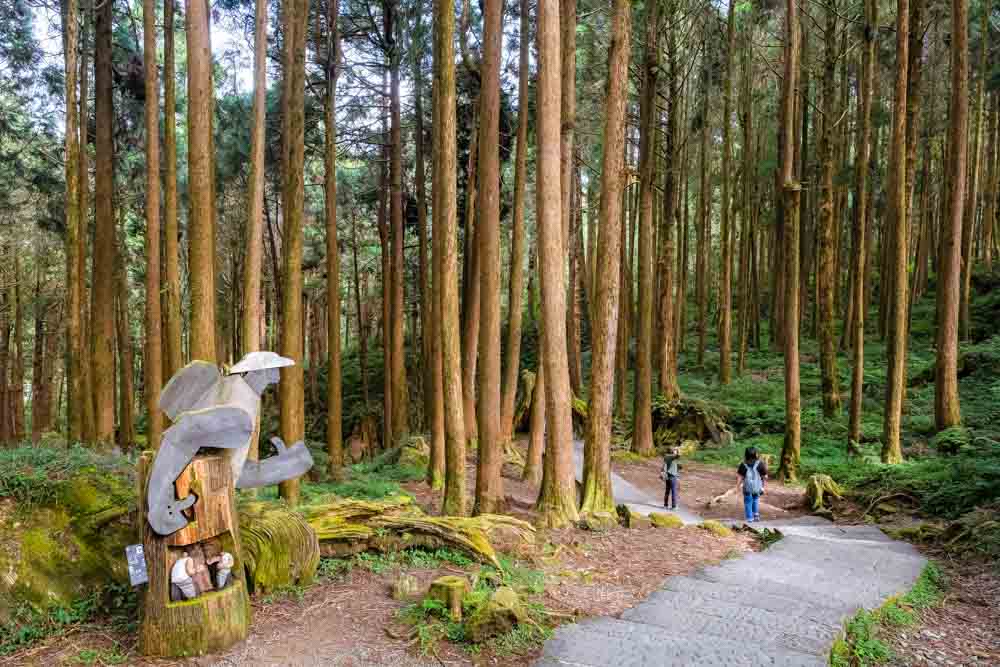


Shizhuo
For those traveling to the forest recreation area by road, Shizhuo presents a convenient stopping point for a few hours (or more). Clustered around the 63-kilometer marker on the Alishan Highway (Provincial Highway 18), this cloud-shrouded tea village has hotels, restaurants, tea shops, and a network of scenic interconnected hiking trails.
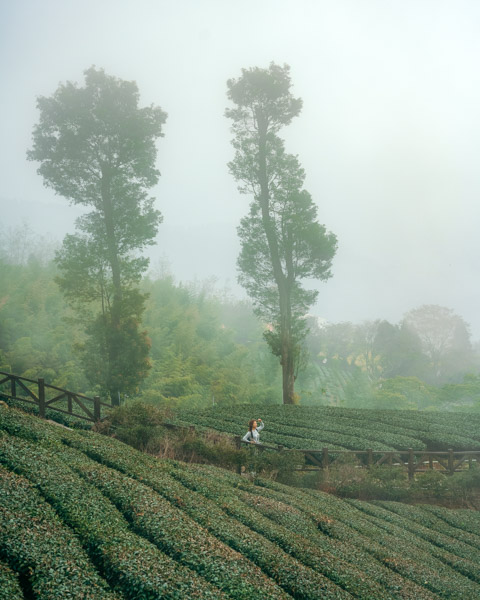
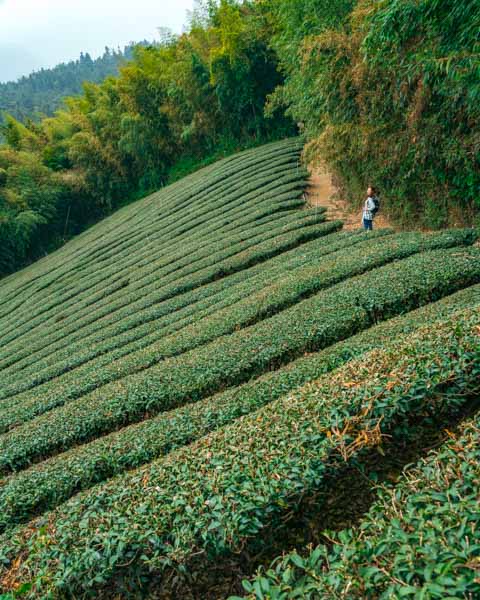
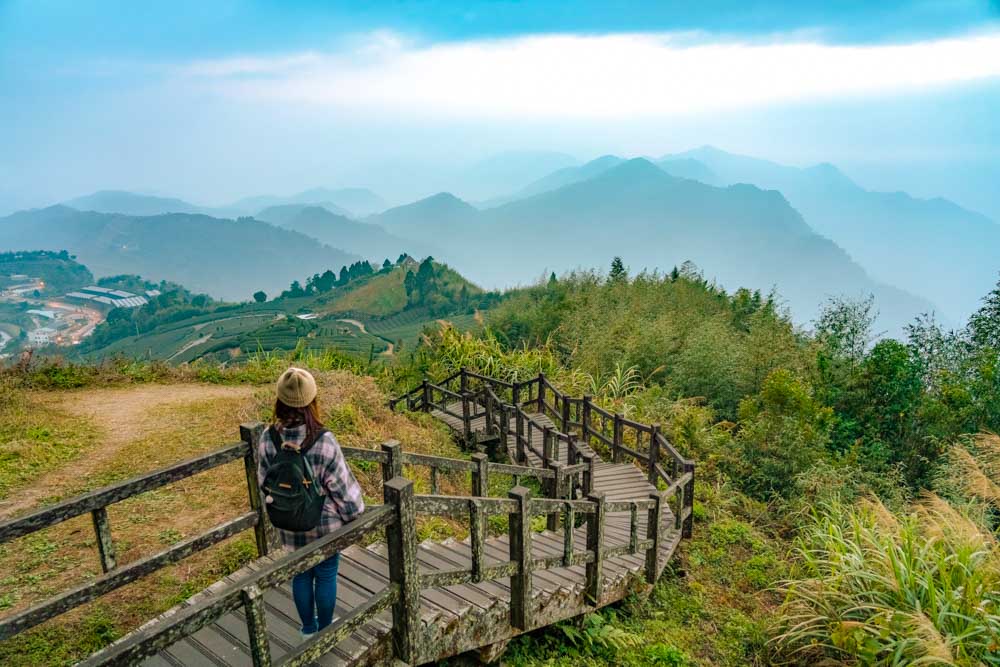
The six routes all bear nature-inspired names (Tea, Mist, Sunset, Sakura, Cloud, and Romantic – love is a force of nature, right?), and can be combined in any number of configurations to create loops of varying lengths. But be warned: whichever way you pick, it’s bound to be steep. Fortunately, the scenery offers ample distraction – daily afternoon mists march over close-cropped plantation bushes like an army of spectral tea-pickers, beading the leaves with dew as they go – and if you happen to find yourself in the area for sundown, I encourage you to head to higher ground to watch the afterglow paint the sky with a pastel wash.
Alishan Highlights
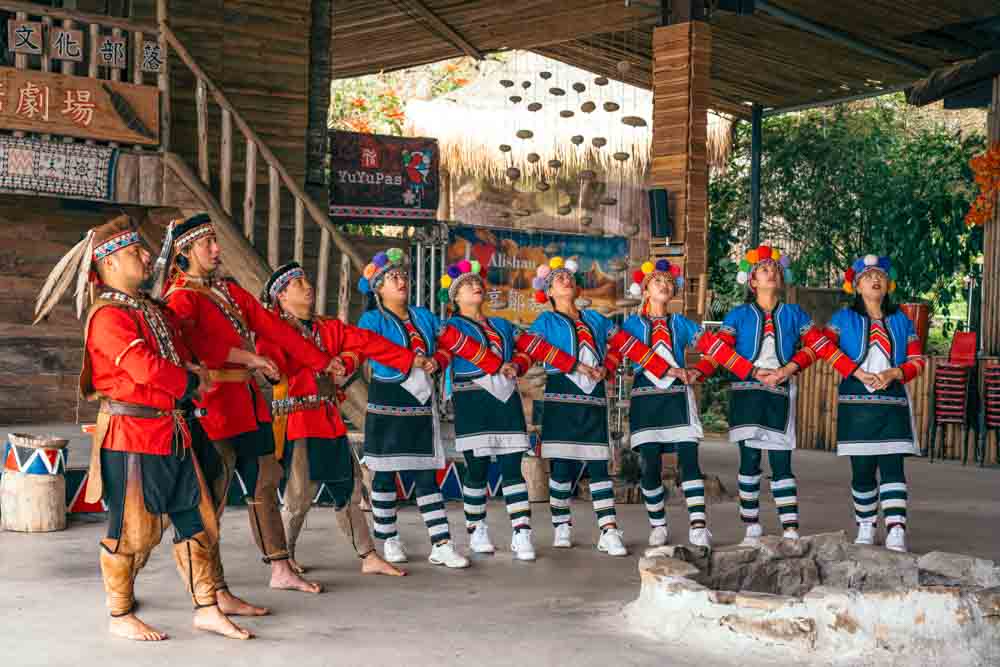
Alishan Coffee
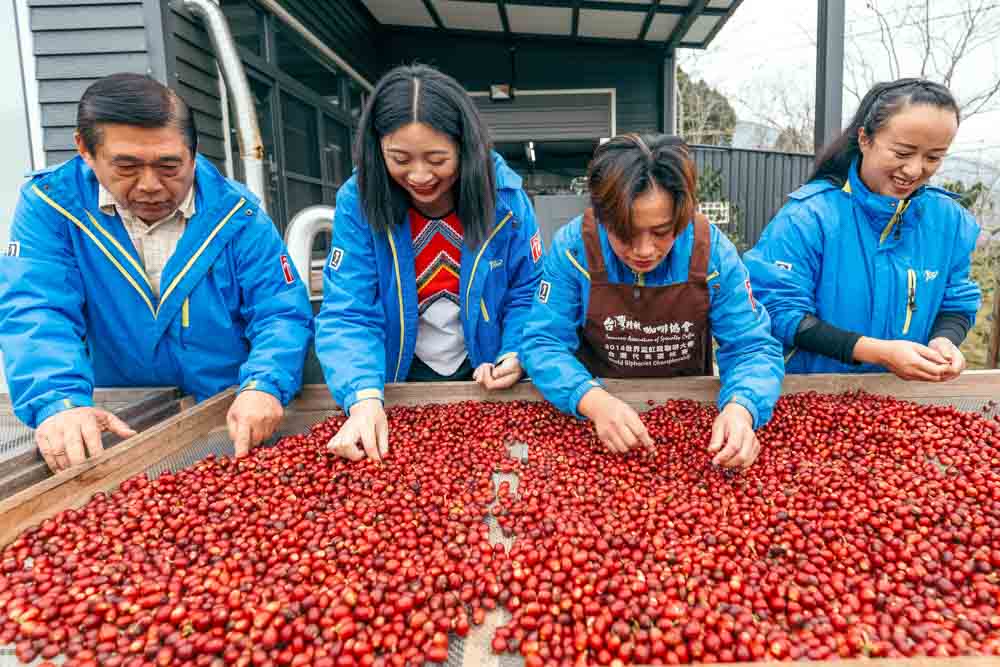
Despite being a nation of tea drinkers, Taiwan has a well-established coffee scene, and Alishan is one of the hubs of a new wave of Taiwanese bean producers. Young enterprises like Zou Zhou Yuan Coffee Estate (www.facebook.com/alsccp) and Alishanwin (www.facebook.com/www.alishanwin.com.tw) are quietly producing world-class coffee, and it seems every mountain hamlet has a café or two serving up bold brews.
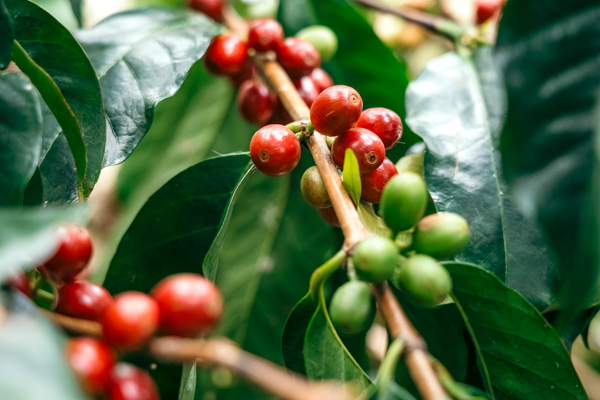
Daguma Alishan Coffee
During my most recent Fenqihu exploration, while on a Travel in Taiwan fact-finding tour, my wanderings – and caffeine habit – led me to Daguma Alishan Coffee. Seats spill out to occupy facing storefronts lining Fenqihu’s original commercial artery – “Fenqihu Old Old Street,” as it’s now known. Before the railway line was blazed, this narrow, sloping lane was the heart of a tiny mountainside settlement, but then the trains came, bringing people and progress, and pulling the village center northward to where tourists now queue for bento boxes and millet donuts on a newer commercial artery, the aforementioned Fenqihu Old Street.
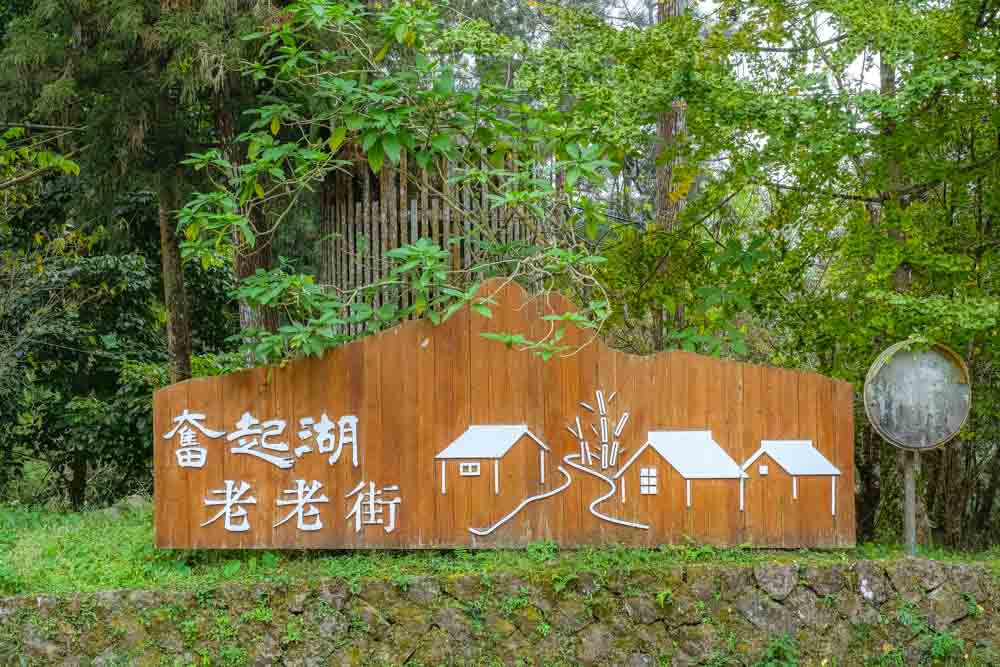
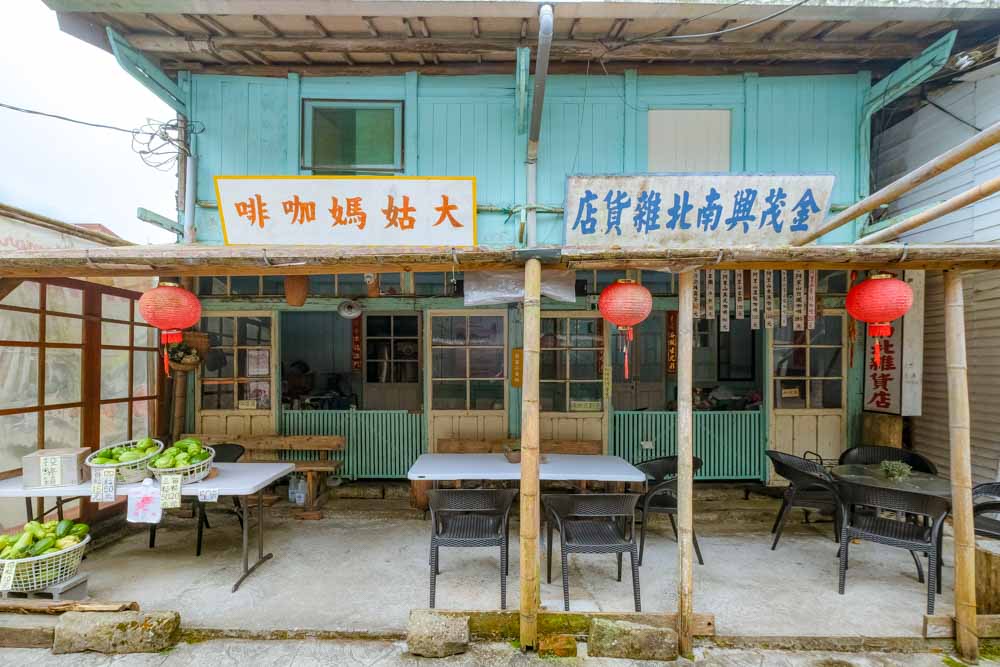
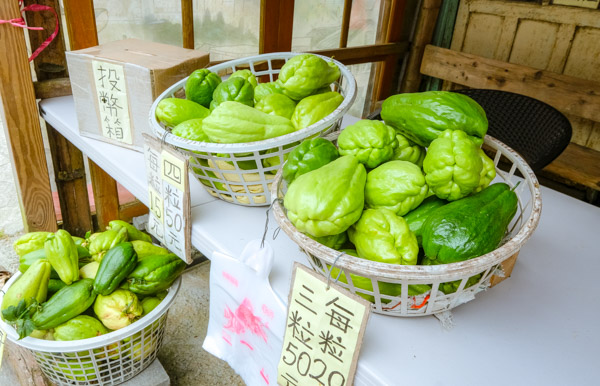
Today, a visit to the older Old Street feels like stepping back in time. Many of the buildings lay dormant, dust gathering in the interiors and weathered timber seeming to daydream of returning to the forest. Daguma Alishan Coffee fits perfectly with this sleepy atmosphere. A former general store, it bears characters dating its construction to the third year of the Taisho Era (1914), and its scuffed, mismatched furniture lounges beneath bamboo-supported awnings. When I visited, gentle instrumental versions of popular old songs floated out from speakers, punnets of chayotes sat beside an honesty box, and an elderly black dog dozed on the porch.
The menu’s brevity and lack of pretensions are decidedly not the kind of thing you’ll find in Taipei’s upmarket cafés, but it offers plenty for coffee purists to get excited about. The husband-and-wife owners grow their own beans locally and process them in several ways to coax out different characteristics: bold, fruity sun-dried beans, bright and clear washed beans, and honey-processed beans with sweetly fruity notes. (In a small act of concession to those averse to proper coffee, they also offer lattes made with Alishan beans and a short selection of local teas.) If you’re hoping to enjoy Fenqihu without the crowds, this is precisely where you belong.

Daguma Alishan Coffee | 大姑媽阿里山咖啡
Add: No. 20, Fenqihu, Zhonghe Village, Zhuqi Township, Chiayi County
(嘉義縣竹崎鄉中和村奮起湖20號)
Tel: (05) 256-1253
Ajang Home
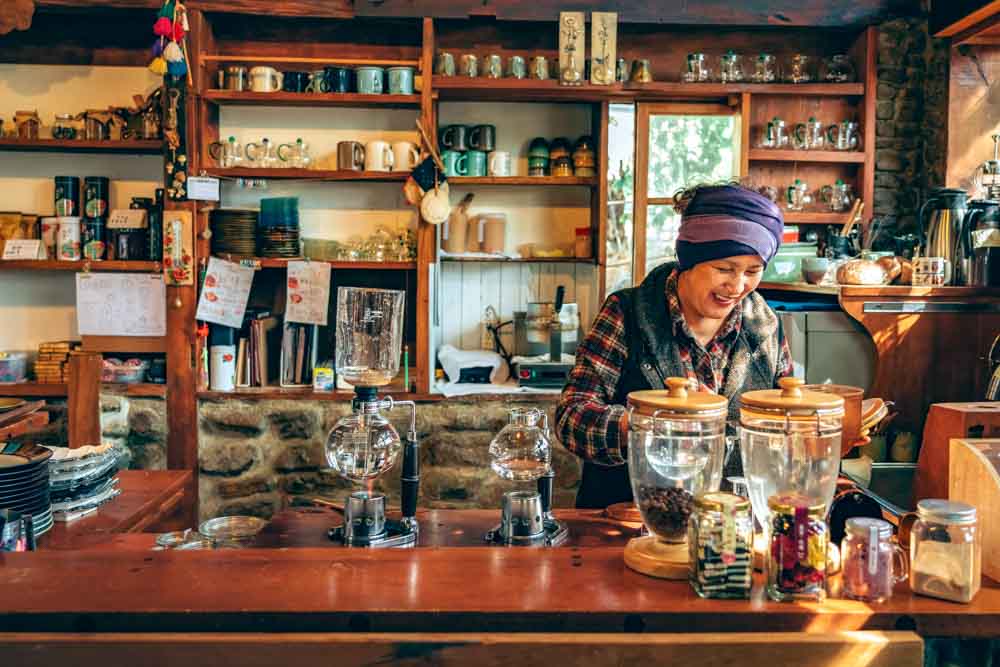
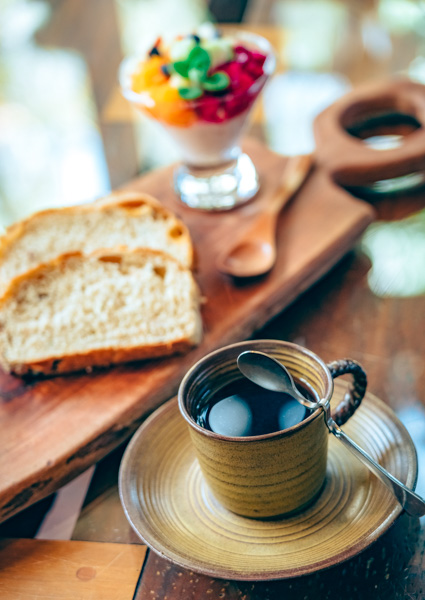
For something altogether different, whimsy-loving caffeine friends should venture to Ajang Home, a coffee shop in the Tsou tribal village of Lelauya, a 10-minute drive into the hills south of the Alishan Highway. Leaning hard into its mean bean credentials, the menu text beside the three single-origin Alishan coffees rather sternly informs guests that coffee is served freshly ground and without sugar or milk to showcase its superior qualities. But don’t worry, those less enamored by quality coffee don’t need to go thirsty – the store also offers a selection of teas, including milk teas, and hot cocoa.
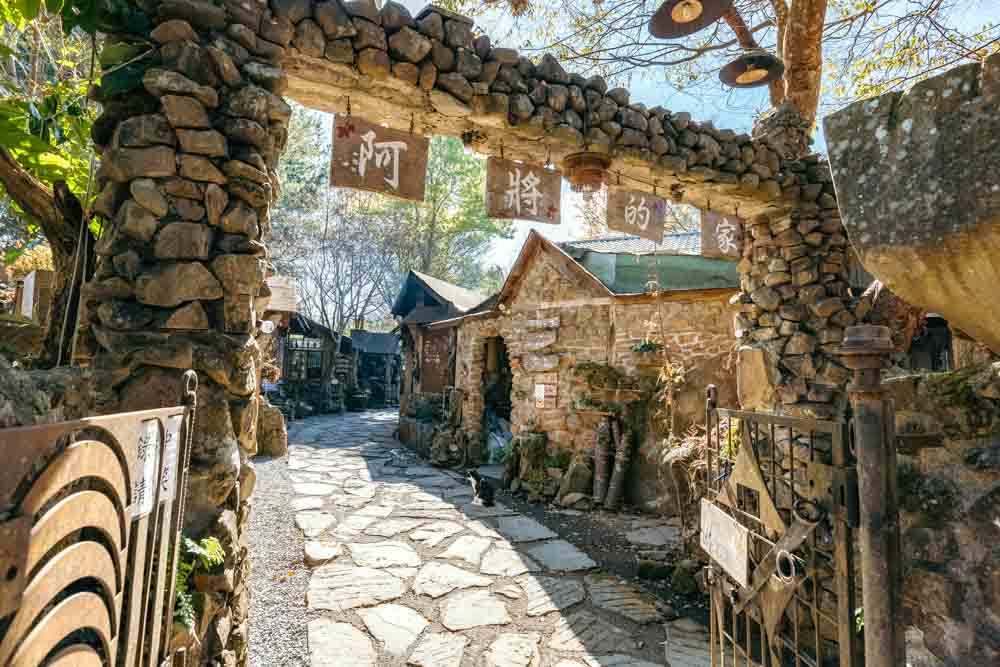
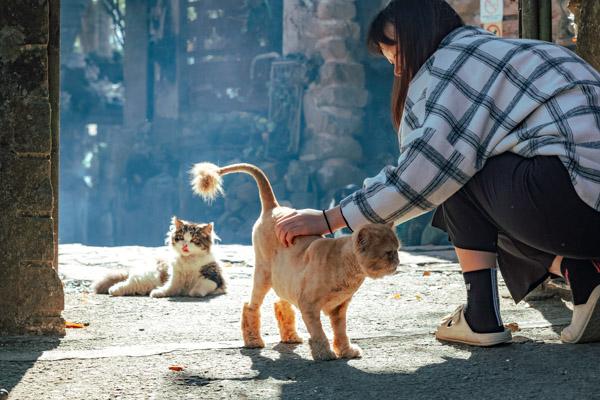
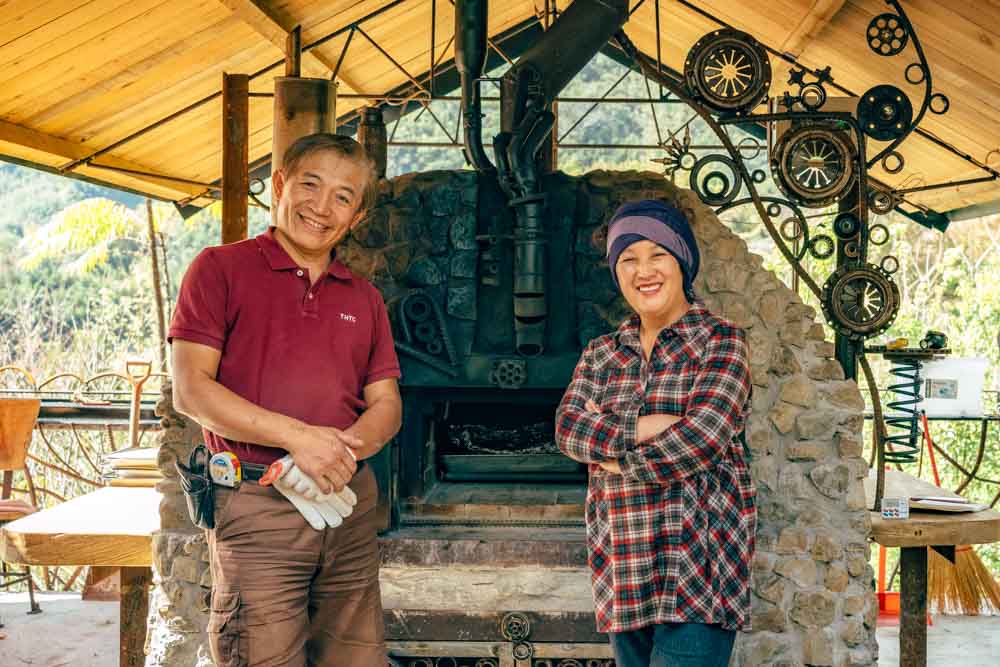
However, as delectable as the drinks and snacks undoubtedly are, the primary reason travelers make the trip out to Ajang Home is to experience the café’s weirdly wonderful surroundings. Owner-architect Ajang is a member of the Tsou community, who, in response to Typhoon Herb leaving him homeless in 1996, built a fantastical cluster of houses using recollections of ancestral architecture and scavenged odds and ends. His style is perhaps best described as indigenous Taiwanese meets Miyazaki meets steampunk elven encampment, and guests will find many quiet nooks and seating areas secreted away throughout the grounds. A daily cap on visitor numbers (arrive early on a weekday or book via the LINE app to get a spot on weekends) ensures the facility and its free-roaming cats never get overwhelmed, and allows guests to indulge in the fantasy that they’re residents of a fairytale mountainside utopia.

Ajang Home | 阿將的家
Add: No. 129-6, Neighborhood 4, Leye Village, Alishan Township, Chiayi County
(嘉義縣阿里山鄉樂野村四鄰一二九號之6)
Tel: 0933-328-086
FB: www.facebook.com/ajanghome
Alishan Tea
Alishan’s coffee scene is currently going through a renaissance, but coffee is not generally the first beverage that comes to mind when thinking of this lofty domain. That distinction goes to tea. Scooter the twisting roads at the right time of year, and the vegetal perfume of sun-withering leaves is omnipresent. Indeed, the region is so synonymous with tea growing that it has spawned a whole category – high-mountain tea, or gao shan cha. Yet despite this close relationship, Alishan’s tea industry is barely half a century old.
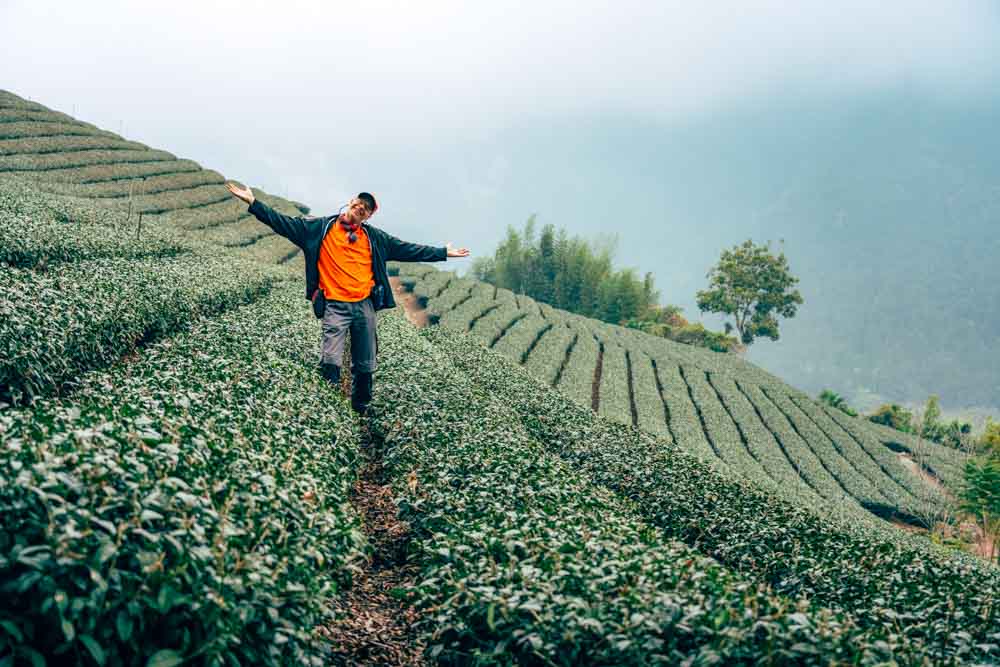
Before the 1970s, few thought growing tea – notoriously cold-shy – was viable at higher altitudes in Taiwan. The hills around Shizhuo, where much of Alishan’s tea comes from, sit 1,200-1,500 meters above sea level, and finding varietals suited to growing so high took persistence. Elevation aside, Shizhuo’s landscape and unique weather patterns are ideal for growing tea. It has well-drained, nutrient-rich soil and abundant clean water, but the magic ingredient is the region’s persistent fog. Rolling in like clockwork each afternoon, gauzy clouds bring a gentle, diffused light that protects leaves from becoming bitter.
Mountain Ali Tea No. 35
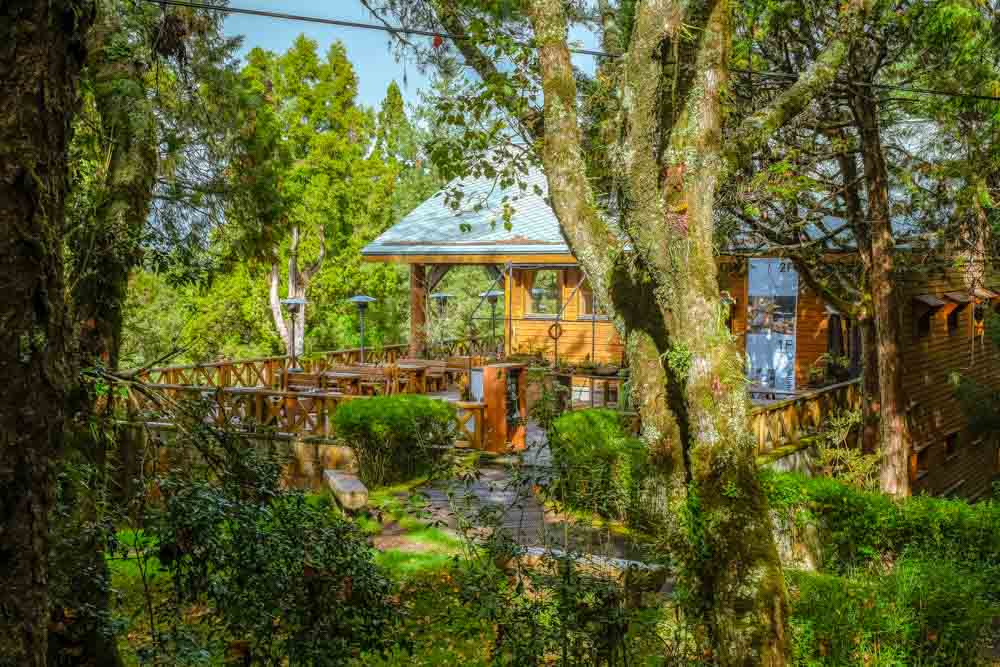
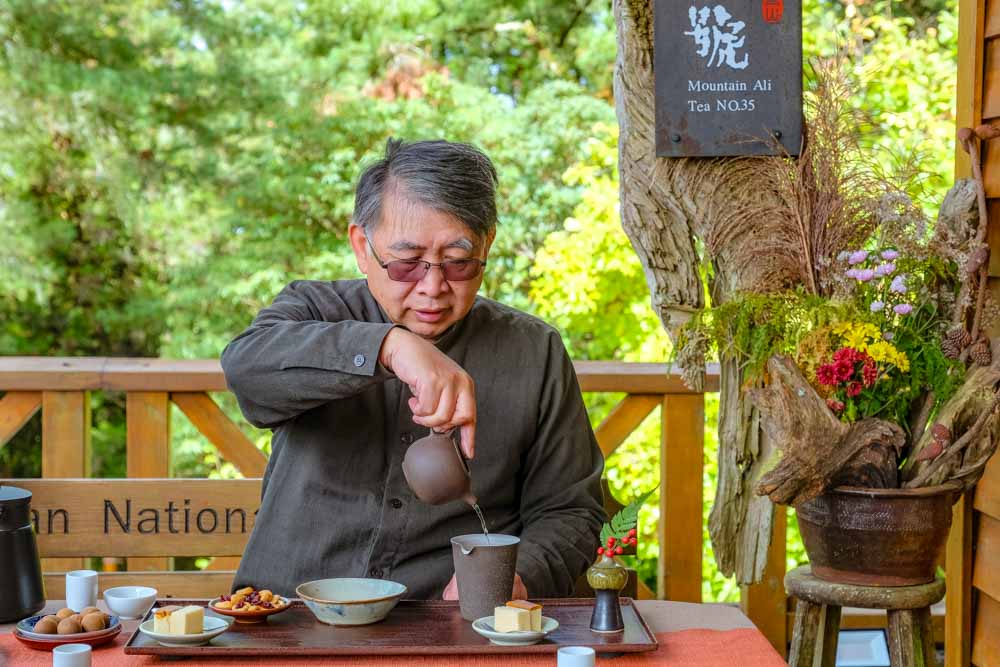
Someone who knows more than most about Alishan’s tea industry is David Wu, chairman of the Alishan Eco-Tourism Association. Wu, who, along with his sister Sophia, runs Mountain Ali Tea No. 35, was born into a tea-growing family and actually grew up inside the boundaries of the Alishan National Forest Recreation Area. Both spent periods living further afield, but never escaped the pull of their forested home area. So, when the park administration sought vendors capable of doing something with an empty property beside the prime sunrise-viewing location (Mt. Ogasawara Lookout), they decided to draw on their tea-growing heritage and give it a try.
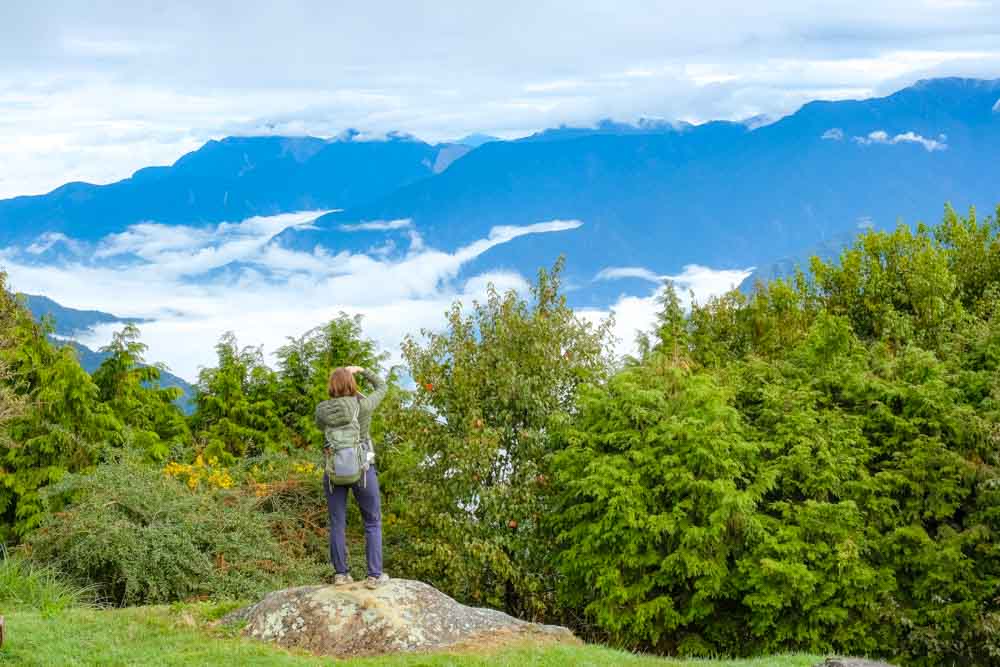
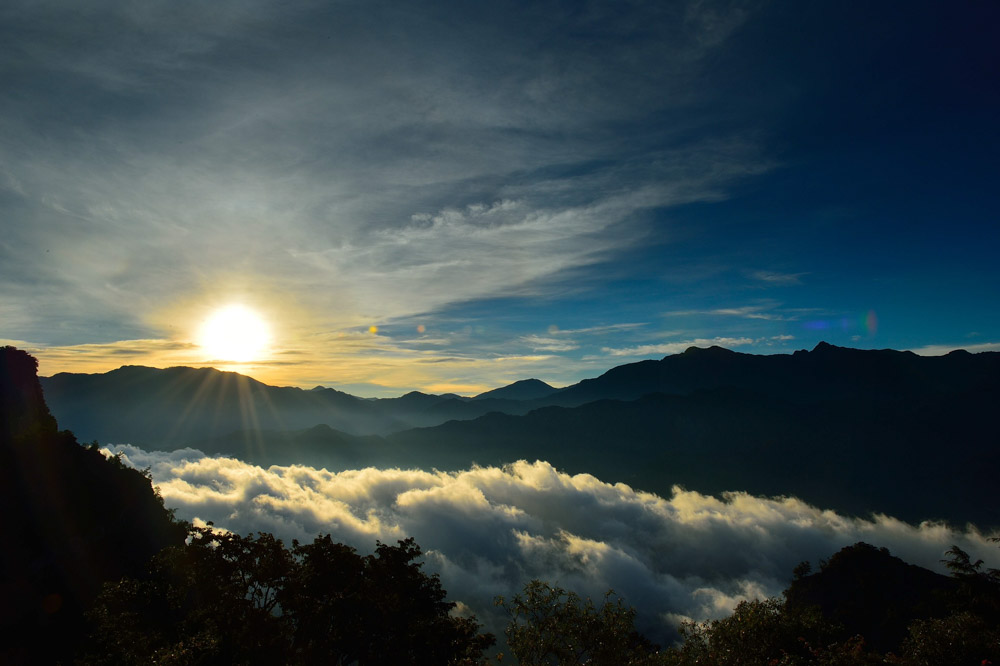
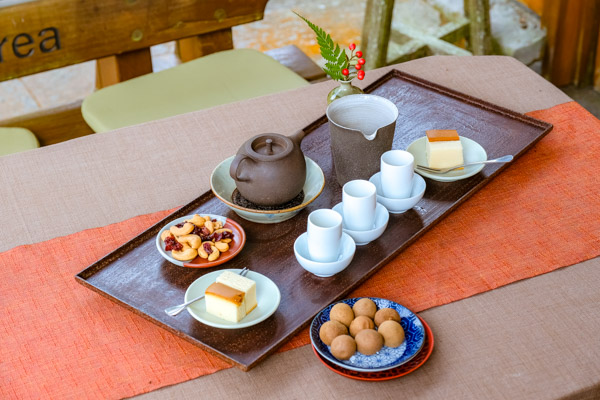
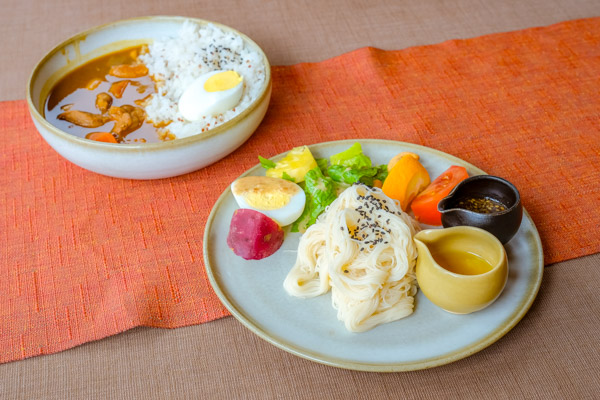
That was nearly nine years ago, and the two seem to be in their element. Their café-cum-exhibition-space opens early to cater to the sunrise crowd, and often enough, you’ll find Sophia or David introducing the scenery to guests from all over the world. Many visitors hurry straight back down to the train station after having taken in one of those mesmerizing sunrises over distant Mt. Jade, but the wiser ones linger to sample Wu’s teas, enjoy a nourishing brunch, and watch Mikado pheasants strut regally through the sharp morning air. As Wu told us during our recent visit, drinking a cup of tea, much like encountering the forest, should not be a hurried affair. If you’re doing it right, it is restorative – you should walk away feeling eased in mind, body, and spirit.
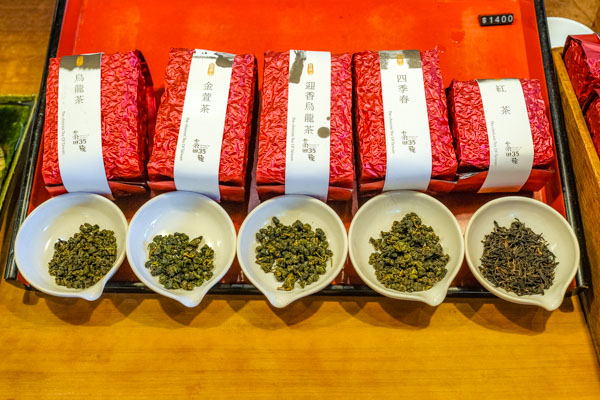
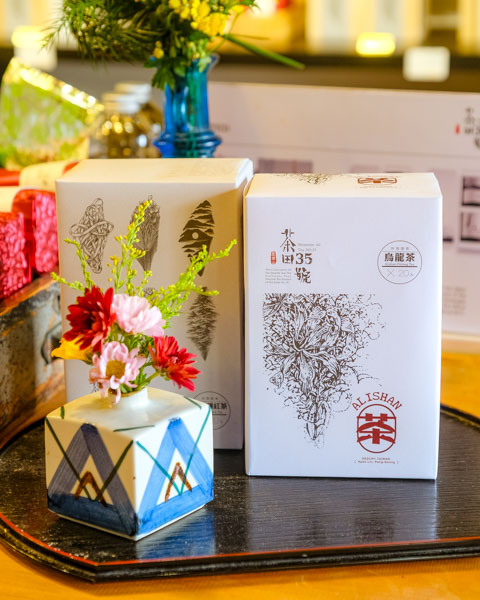
Mountain Ali Tea No. 35 | 茶田35號
Add: No. 34, Zhongzheng Village, Alishan Township, Chiayi County
(嘉義縣阿里山鄉中正村34號)
Tel: (05) 267-9764
Website: ag.alishan18-35.com
FB: www.facebook.com/alishan1835
Zengin
As much as I am a wholehearted subscriber to Wu’s philosophy, the freedom to sit and warm the soul with cups of freshly brewed tea can feel like a luxury in today’s busy world. Thankfully, even time-strapped travelers can enjoy some of Alishan’s finer teas. For those who need to combine a cuppa with a roadside pit stop, Zengin is a convenient option. Another family-run business, the establishment was opened by the son of tea farmers as a way to keep his parents out of mischief in their senior years.

The tea/coffee store sits right beside the Alishan Highway, so anyone visiting by car can easily pop in and sample their three signature teas: oolong, jinxuan (aka milky oolong, on account of its buttery-smooth mouthfeel), and honey-scented black tea, which derives its particular flavor profile from the tea leaves’ reaction to being bitten by leafhopper bugs. If you hit upon one you particularly like, Zengin doubles as a tea boutique, so you can grab some leaves to take home and enjoy a cup of mountain calm long after you’ve returned to your daily grind.
Zengin | 然井茗露
Add: No. 123-18, Neighborhood 4, Leye Village, Alishan Township, Chiayi County
(嘉義縣阿里山鄉樂野村4鄰123之18號)
Tel: (05) 256-2257
FB: www.facebook.com/zengincafetea