

An Old Railway Town and Its Tourist Charms
TEXT | RICK CHARETTE
PHOTOS | VISION
For the international traveler, except for its Taoyuan International Airport, Taiwan’s main gateway, the city of Taoyuan is largely terra incognita. Right beside Taipei/New Taipei City, most bypass it on the way to bigger-name attractions in the island’s center and south. Expats in the know, however, are well aware of its myriad worthy allures – here we explore charismatic Fugang, a time-capsule old market town.
Despite its “city” status, Taoyuan is overall rural. The large silt tableland that runs in from the Taiwan Strait coast here is cut up into countless small farms. Further inland you cross through foothills that lead to the higher peaks of the island’s north-south spine of thick mountains.
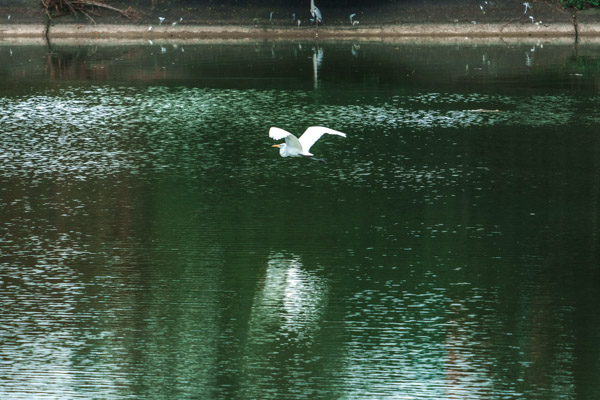
Look down over the elevated plain as your plane approaches/departs the airport, and your view sparkles with an army of large mirror-reflection irrigation ponds, most of which date to Taiwan’s imperial era. The Fugang agri-production area is part of this unique landscape.
Content
Fugang Railway Station
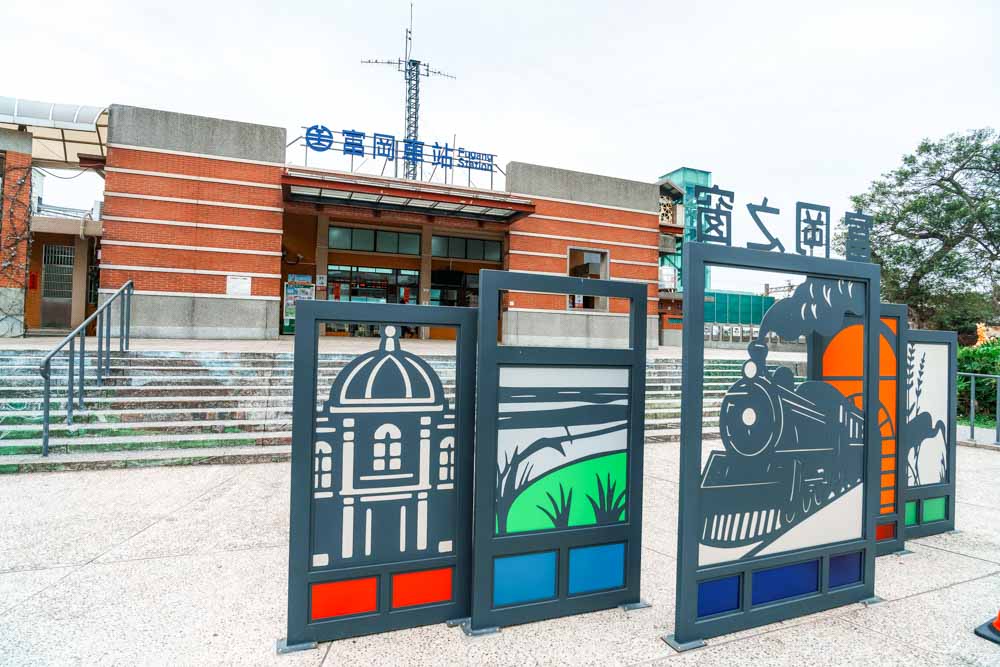
Fugang flourished after the Japanese, who ruled Taiwan 1895~1945, built a train station there – today called Fugang Railway Station – in 1929. A 1988 renovation gave this heritage-protected work a more modern, stylish appearance. The station and an abundance of long-in-place architecture and family-run shops in the nearby streets offer a glimpse into the growth of early 20th-century Taiwan when railways connected small towns, inspiring commerce and community life.
Fugang Old Street
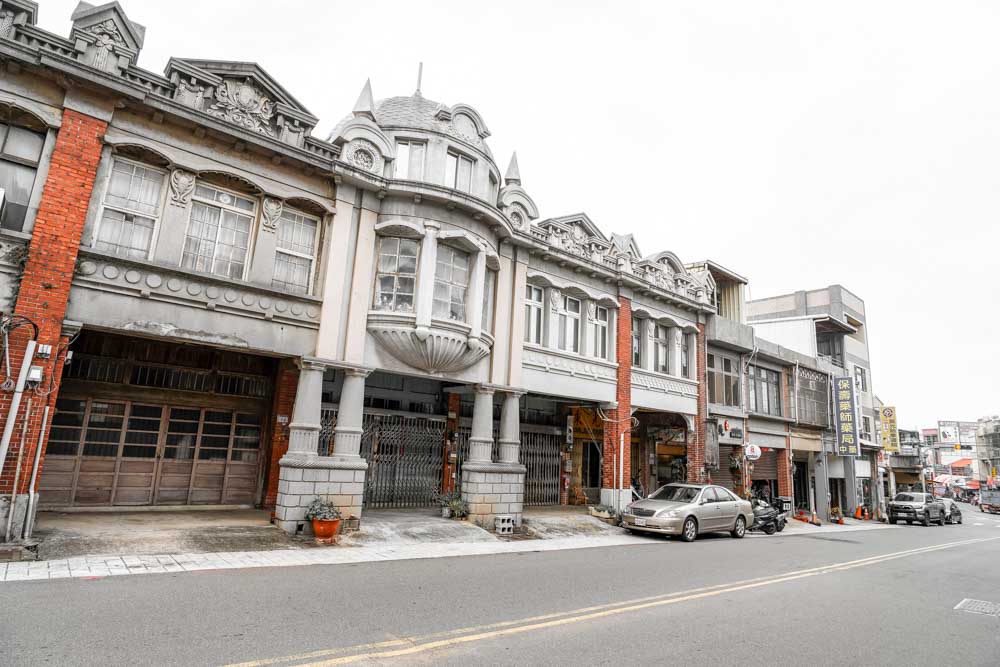
Today, a commuter stop (on the West Coast line), Fugang is served solely by local trains. To the station’s east and west, along Chenggong Road, you’ll see a collection of grain warehouses built during the town’s rail-shipment heyday. Zhongzheng Road, i.e. Fugang Old Street, runs straight ahead (north) from the station. The town’s other landmark building is found on the first section from the station, on the west side – the two-story Yangmei Fugang Lu Mansion. Spanning five street-level shop façades, this arcaded, boldly ornamented neo-Baroque property is a showcase of the merchant wealth generated here before modern times left the original large-capital local commercial ventures behind.
| Fugang Railway Art Life Festival A Gold Winner in the 2025 London Design Awards and 2026 French Design Awards, this week-long festival (Nov~Dec) celebrates Fugang’s history and culture as a railway town. Centered around the station and Old Street, it features nostalgia-themed art installations, special street performances, local food experiences, agri-product promotion events, and in-depth guided community tours. |
Fugang Story House
Two doors east of the railway station, you’ll pass the handsome Yangmei District Farmer’s Association building, a renovated warehouse with a comely roof of Japanese-style tiling and a red-brick and terrazzo façade. Inside, browse the area’s premium agri-commodities and sit down to such freshly-made goodies as ice treats, waffles, and coffee. (You’ll see the association’s name posted in English on the exterior.)
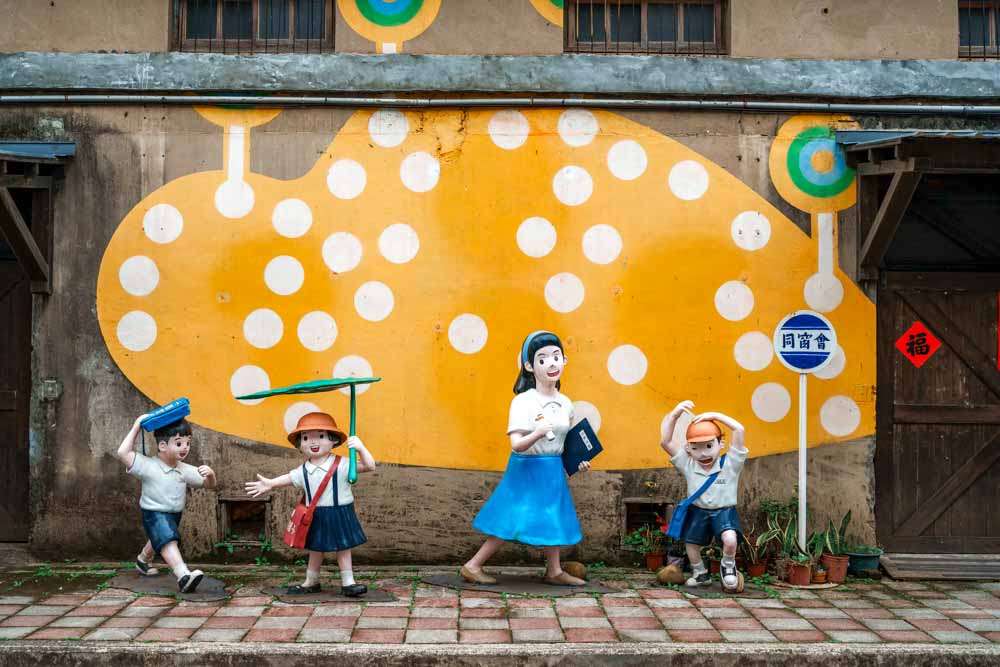
Right next door (further east) is the Fugang Story House. You can’t possibly miss it – outside are cute statues of kids in school uniforms waiting for the bus (covering their heads from the rain), and the façade is festive with brightly painted Fugang-brand images, such as straw-hatted farmers working their rice paddies and an old-time vendor’s bicycle with a food cabinet mounted on the back. Also captivating are the two oversized antique wooden doors – this was originally a rice granary.
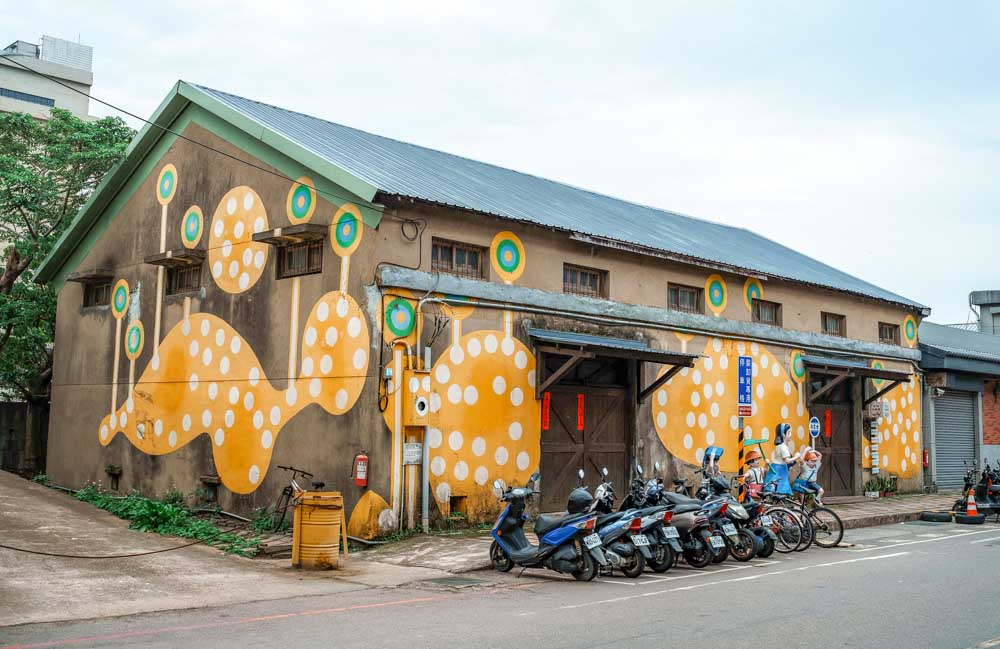
The interior of the two-story structure is cavernous, and the original concrete walls and ceiling rafter-work have been left exposed for history-buff pleasure. Original rice-measuring scales also remain on the walls. The warehouse’s upper level today introduces the town’s past (info in Chinese) – primarily focused on its railway and rice-cultivation history – while the ground level serves as a multifunctional space (Hakka-theme performances and craft activities, even Sunday church mass). The upper level’s most compelling displays are the bird’s-eye-view scale models of yesteryear railway-town settings and scale models of past-era rolling stock and railway yards.
Bygone Fugang was a distribution center for all the settlements in the area. Rice would be hauled cross-country by cart, oxen most commonly the locomotion force, for milling at one of the numerous station-area mills. Most of the aforementioned warehouses were used for rice or fertilizer storage. A market formed before the station first; today’s main and offshoot “old streets” organically took shape thereafter. There is a strong ethnic Hakka presence in the area; the Xinfu Hakka Cultural Association was formed in 2019, first using today’s Fugang Story House facility as its base before launching this museum in 2022.
Fugang Story House | 富岡故事館
Add: Bldg. C, No. 25, Chenggong Rd., Yangmei Dist. Taoyuan City
(桃園市楊梅區成功路25號C棟)
Tel: 0917-798-671
Hours: Sat and Sun 1pm-6pm
FB: facebook.com/fugangstoryhouse
Earth God Temple
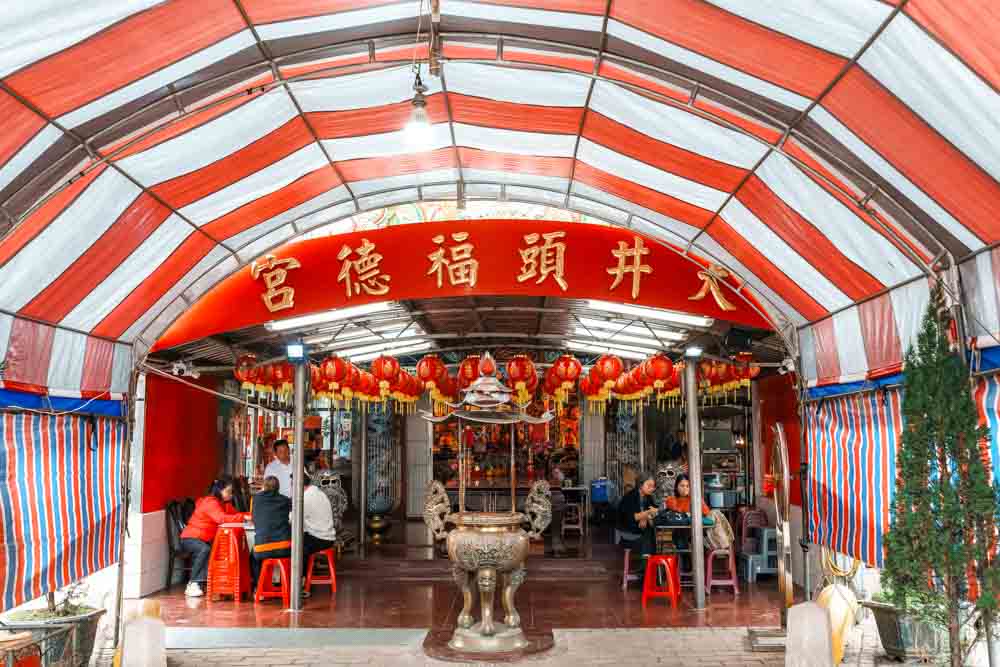
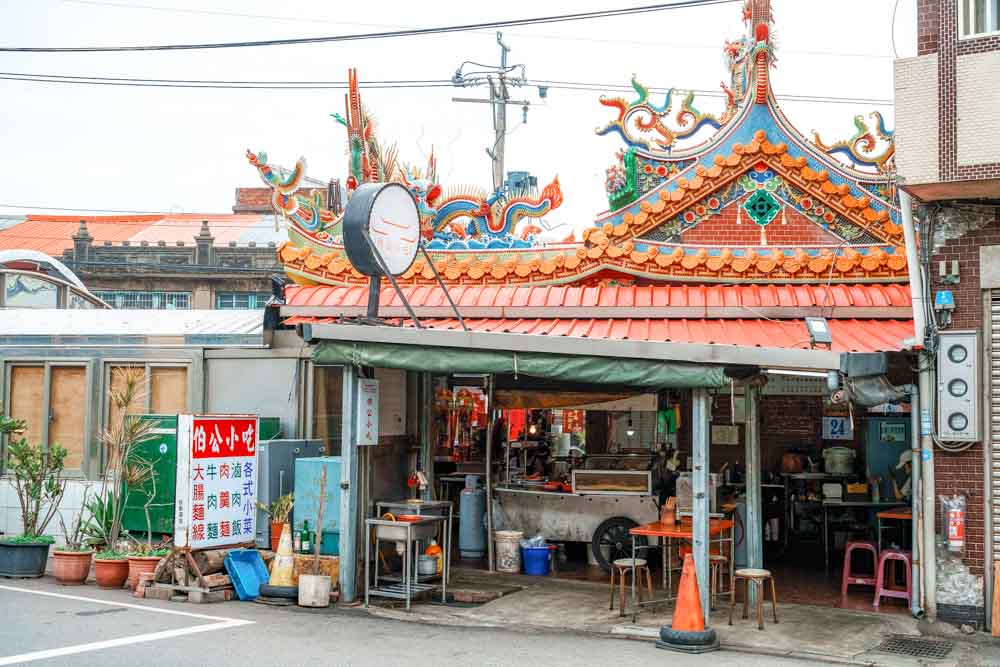
At the northern end of two-block-long Fugang Old Street is a compact, antiquated Earth God temple, and built up against a perimeter wall is Bogong Food Stand, a town icon and de rigeuer stop for day-trippers.
A quick aside before we find out what’s on the menu: the Earth God is the Hakka people’s most important guardian deity, referred to fondly as “Bogong” (Mandarin pronunciation), the Hakka term for family-protector elderly relatives. In times long past, Hakka settlers worshipped trees or rocks as Earth God symbols, eventually building temples at these sites. Fugang’s original name was Bogong Gang, the “gang” meaning “hillock.”
Bogong Food Stand
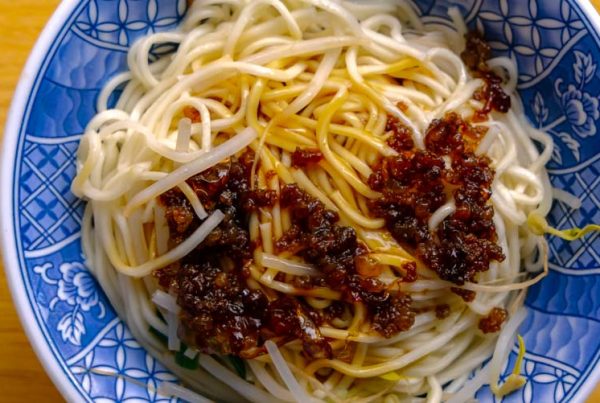
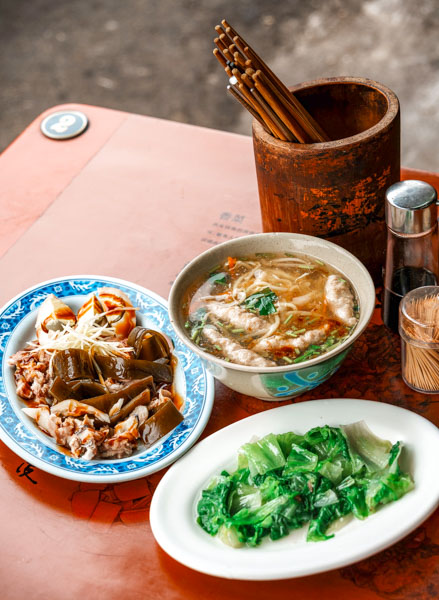
Bogong Food Stand, opened in 1985, is a classic rural-area ramshackle metal-sheeting structure, its face open to the street, with patrons sitting down on metal-legged stools at rickety small folding tables. Bring a hefty appetite, because the dishes are all traditional Taiwanese home-style hearty – the signature dishes are beef noodles, vermicelli with pork intestine, and thick meat soup with noodles.
Bogong Food Stand | 伯公小吃
Add: No. 63, Zhongzheng Rd., Yangmei Dist. Taoyuan City
(桃園市楊梅區中正路63號)
Hours:11:30am-9pm
FB: facebook.com/bogongfoodstand1985#
“Fugang Small-Town Lemon Ice Stop”
After your hot meal, a nice ice treat will help with your digestion and prepare you for further explorations. “Fugang Small-Town Lemon Ice Stop” is a block-and-a-bit west of Zhongzheng Road, on Zhonghua Road beside the town’s post office. All the classic Taiwan cooling bonne bouches are found here, from fresh hand-made fruit drinks to milk teas to smoothies to beancurd puddings to herbal jelly. Portions are large and prices low: beverages are 700cc, and NT$50 is the highest number listed. Try flavors you’ll likely not find back home, such as the roselle milk tea, sour plum smoothie, taro smoothie, papaya milk tea, and Taiwan cane sugar grass jelly shaved ice (summer only).
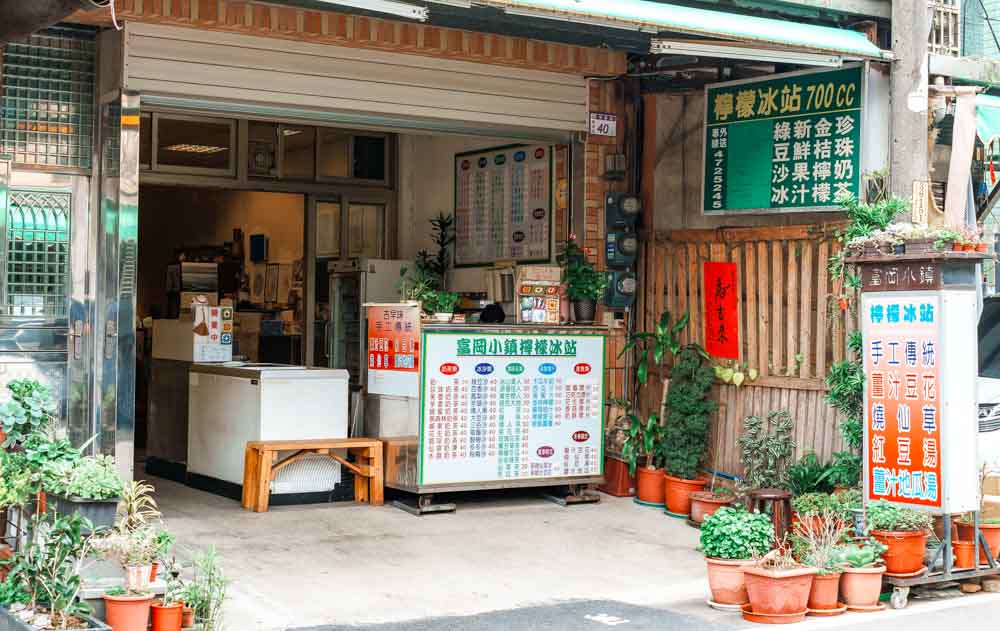
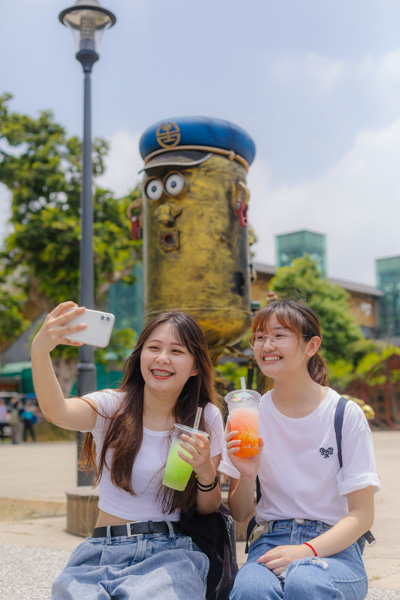
“Fugang Small-Town Lemon Ice Stop” | 富岡小鎮檸檬冰站
Add: No. 40-6, Zhonghua Rd., Yangmei Dist. Taoyuan City
(桃園市楊梅區中華路40-6號)
Hours:11:30am-9:30pm
When Han Chinese farming pioneers were developing the land in this region during imperial days, on what is called the Taoyuan Plateau, they found a scarcity of waterways, and thus created legions of ponds to collect rainwater. At one time numbering almost 10,000, Taoyuan’s nickname “land of a thousand ponds” sprouted to life.
San Lian Pi
Immediately west of Fugang is a scenic open area of shimmering rice paddies and three large, interconnected irrigation reservoirs the size of small lakes collectively called San Lian Pi (“Three Links Pond”). When the Japanese ruled Taiwan, they built an irrigation canal system in Taoyuan that linked up the existing ponds. Here, narrow, placid farm roads and boardwalk/bikeway sections wend their way around and in between the three ponds – many Fugang visitors cycle around town and area on steeds picked up at the YouBike public bike-rental station just west of the railway station (Zhongzheng Rd./Fuyuan St. intersection).
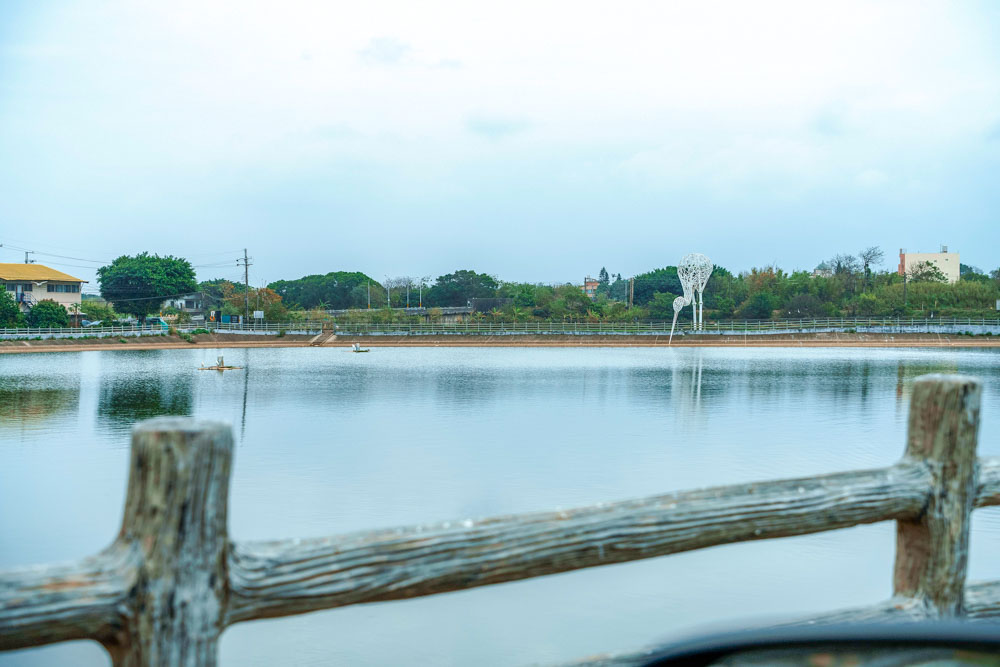
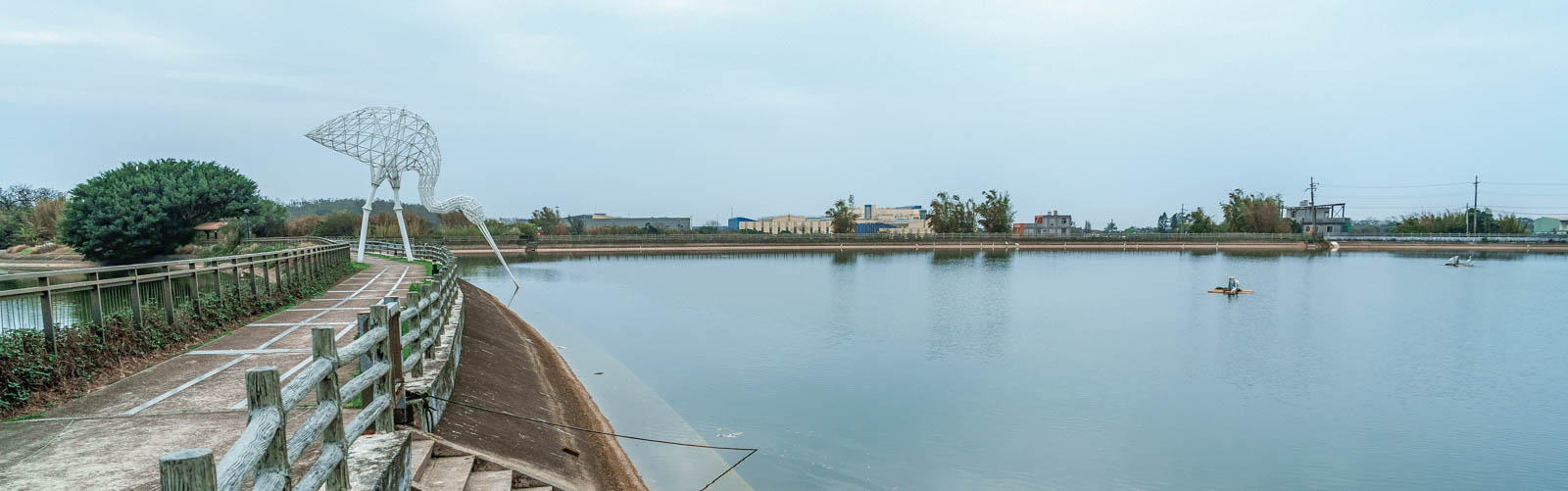
Most visitors to San Lian Pi stop for a check-in photo at the attraction’s famed giant white egret sculpture, created for the 2018 edition of the popular Taoyuan Land Art Festival, which introduces public artworks into citizens’ living spaces and natural environments. The sculpture is a celebration of the birdlife, endemic and migratory, that beautifies Taoyuan’s irrigation ponds, which are also used for aquaculture by local farmers – the unique San Lian Pi scenery is further augmented by farmers’ pontoon rafts, paddle-wheel aerators, and a flock of smaller-sculpture egrets standing in water by the shoreline and floating atop tiny bright-white manmade “islands.”
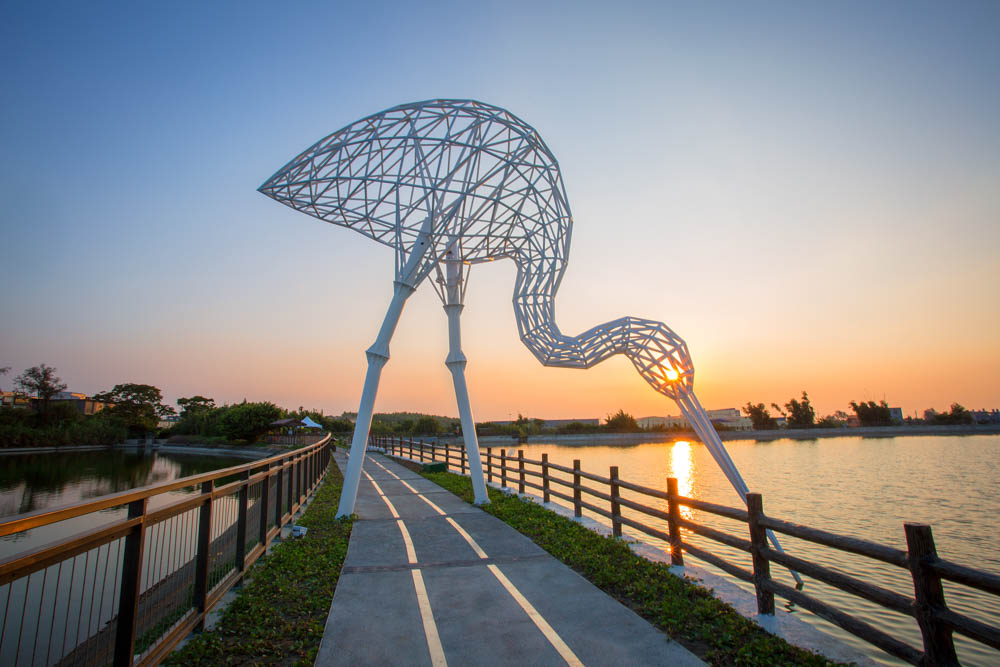
The commanding colossus landscape-art egret stands at the edge of one of the ponds, gracefully bent over with a long beak nipping the surface of the water, intently looking for prey. The levee-top pathway here goes right between its super-elongated stilt legs. This ingenious work moves with the breezes, swaying gently back and forth as if alive, head slowly rising and lowering. If you position yourself right, you’ll also photo-capture trains running along another pond’s edge in the near background.
“Tze-Chiang Express Train Carriage Fude Temple”
Just a bit further west, right beside the railway tracks, is another highly unusual attraction – the “Tze-Chiang Express Train Carriage Fude Temple,” opened in 2019. You’ll never be in another place of worship like this, Taiwan’s only temple inside a railway carriage. It came to be when the Taiwan Railways Administration built its expansive Fugang Depot here, forcing the demolition of an old Earth God temple. This had been a key part of local citizens’ lives, and locals feared its disappearance would leave them without protection.
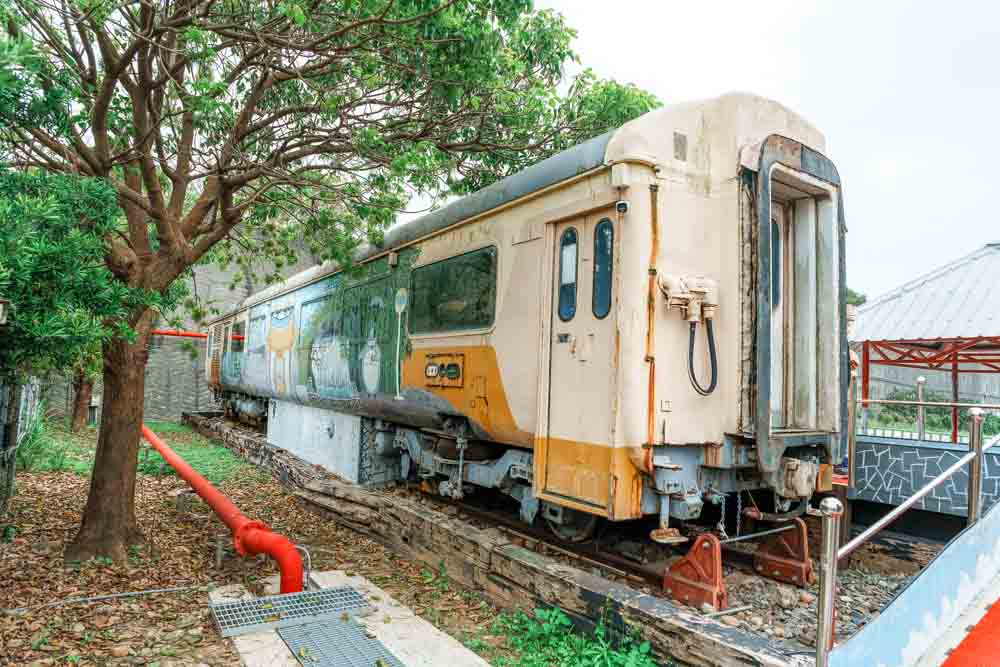
The TRA came up with the creative solution of donating a decommissioned and renovated EMU100 train car, a type affectionately known in Taiwan as the “British Lady,” used in the island’s first generation of electrified Tze-Chiang Express service. It stands on a short section of track, undercarriage equipment fully intact. The original temple’s furnishings now occupy the central portion of the carriage; the new “temple” is entered through the carriage’s open sliding doors. A simple traditional-style covered temple platform was built before the doors to house the original censers and a sacrificial altar. Both the surrounding community and the nearby tracks, plus passing trains and their occupants, are now provided Earth God protection.
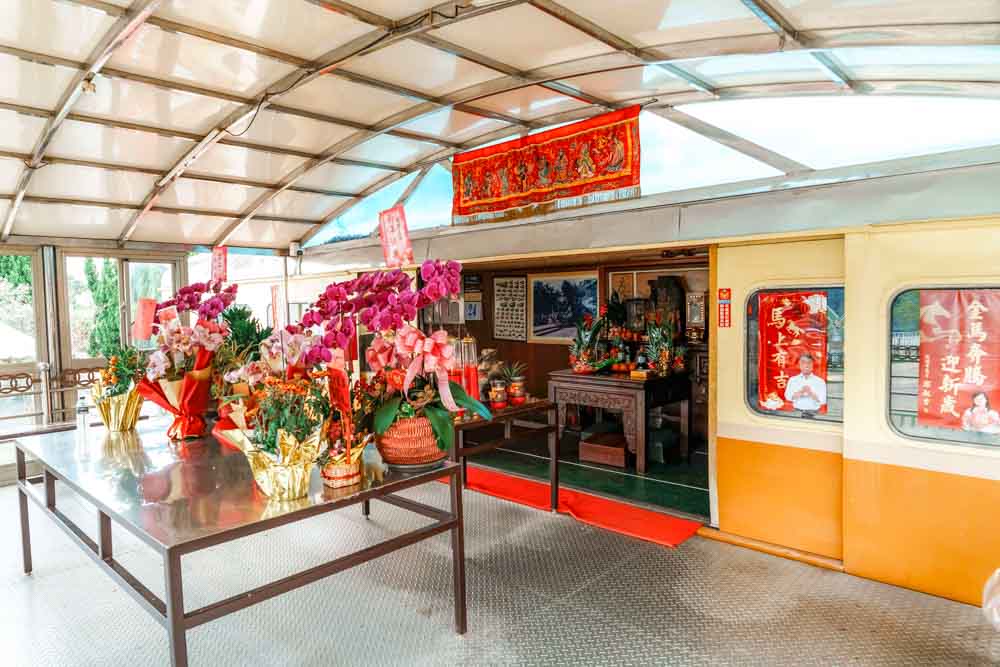
The two end portions of the carriage feature its original seating, tables, flooring, drapes, and wall-mounted fans, along with newly fitted historical railway-related photos. The EMU100 was debuted in Taiwan in 1978, with the last retired in the late 2000s.