

A Visit to Chiayi County’s Coast
TEXT | RICK CHARETTE
PHOTOS | VISION
The coastal towns of Chiayi County are on upraised oases along an ever-shifting world of land and sea, sculpted by silting on a large scale at the edge of the wide, alluvial, and fecund Jianan Plain. The use of great swaths of just-above-sea-level land for aquaculture-farm grids adds to the dramatic effect of being in a world of water.
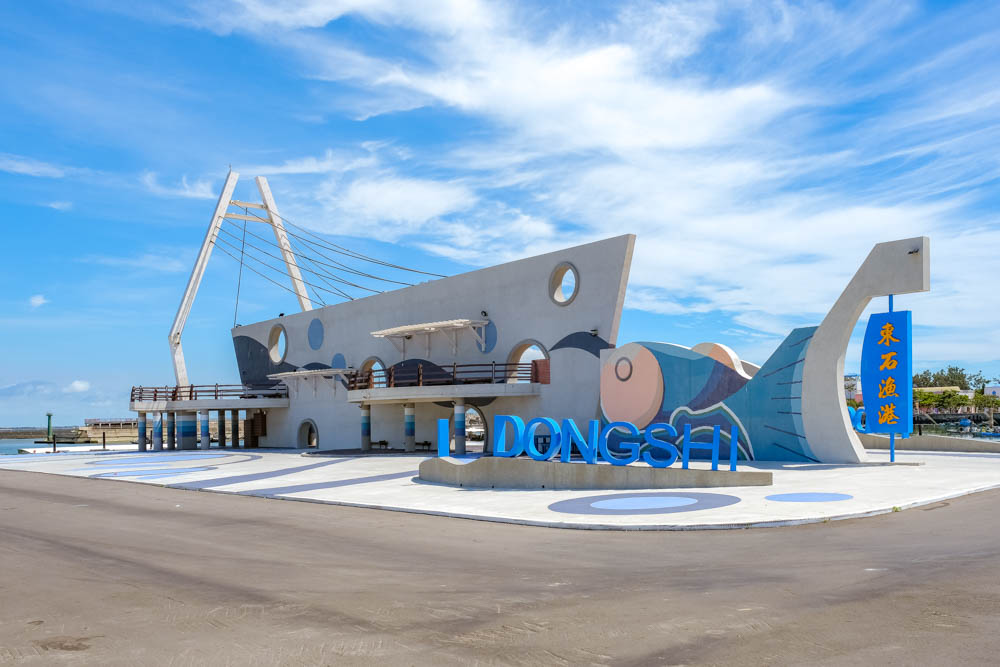
Dongshi is a centuries-old fishing-port village, which has of late become a highly popular tourist destination. It is found on a jut of land extending out into the Taiwan Strait on the north side of the wide and shallow Puzi River estuary. More specifically, it is the large Dongshi Fishing Harbor and Dongshi Fisherman’s Wharf, on the town’s most seaward point of land, that are the big attractions.
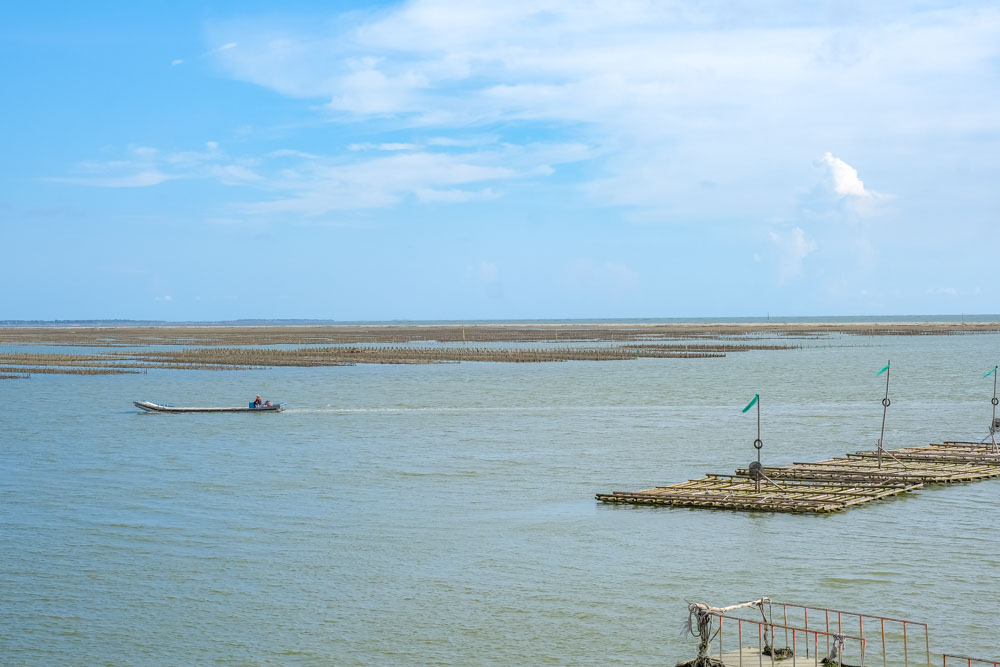
You pass by a legion of aquaculture farms on the long causeway-like road that leads into the settlement, and from the harbor area, you’ll take pic after pic of the armada of oyster racks filling up the estuary. Dongshi Township has the island’s highest oyster production volume. Both Taiwan and China entered the WTO in the early 2000s, and the Taiwan government authorities decided to help the local fishing industry face the stiff Chinese competition by creating more tourism/recreation-oriented businesses. In Dongshi, the large-scale, multipurpose Fisherman’s Wharf facility has been crafted around the harbor, providing full-day entertainment for tourists.
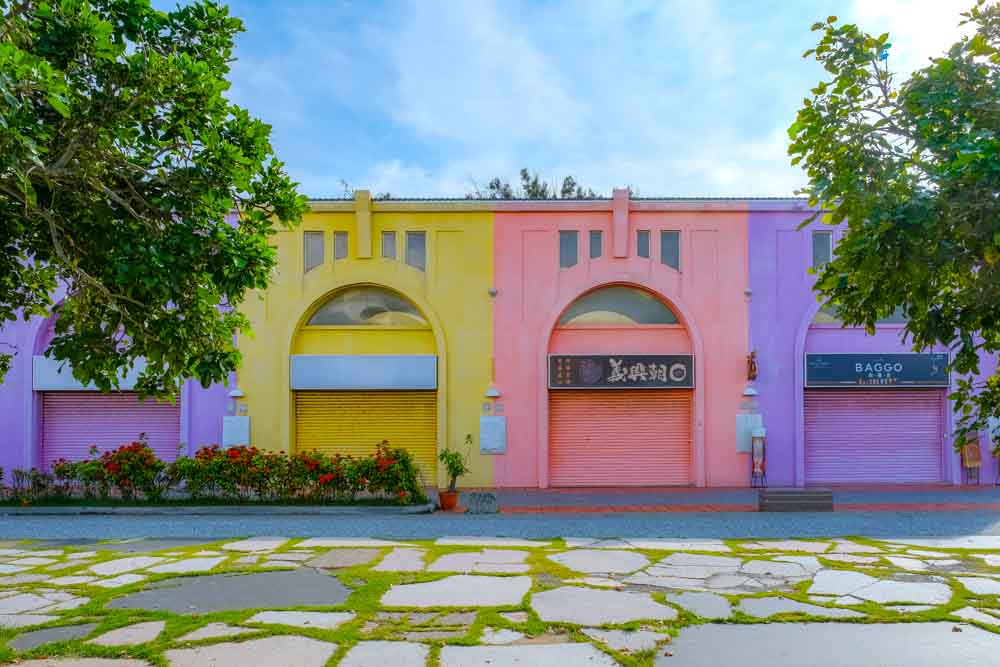
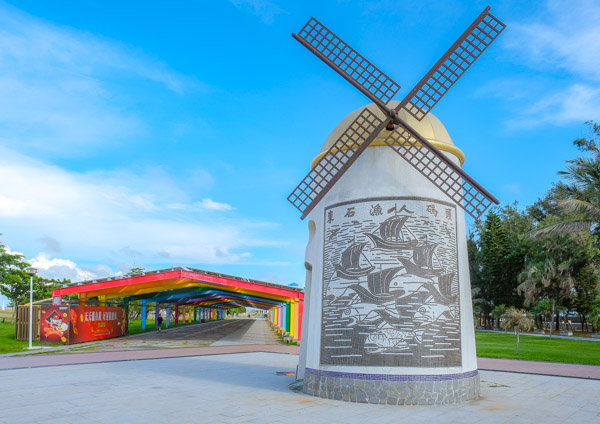
The most eye-catching point of interest is a row of shops with façades painted in pastel colors like the seafront houses in a Mediterranean port. In front of it is a large dryland sand “beach,” splash park, and beach volleyball court. A long promenade runs along the estuary/sea-facing edge of the area (combination boardwalk/ceramic-tile pavement), with the sunset views especially titillating. Ocean-theme art installations abound – frolicking killer whales, a scale version of a Dutch windmill adorned with images of marine beings and sailing craft at sea, etc.).

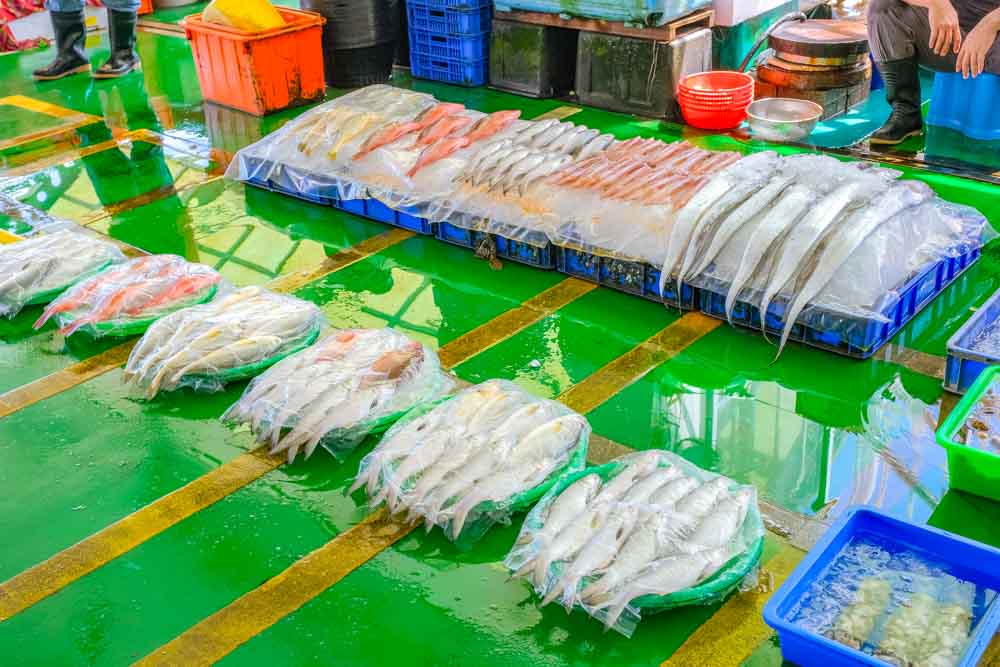
The harbor’s daily catch auction, in which you can participate, starts at 2pm; the kitchen at any of the harborside restaurants will prepare your selections for you. Raft eco-tours also launch from the harbor, upriver past the busy Puzi Estuary Wetlands and out to Waishanding Islet, a huge sandbar that shields the great oyster-rack flotilla from rough waters.
| Dongshi Special Festivities The annual Dongshi Summer Festival, held at the harbor/wharf, features pop music evenings, varied parent-child activities, and a fantastical fireworks show launched from six offshore platforms. The yearly Dongshi Dragon Boat Festival presents exciting dragon boat races offshore from the wharf, a traditional pre-racing dragon boat eye-dotting ceremony, and such other traditional festival fun as egg-balancing contests. |

Content
Ke Laoda Seafood BBQ
Taiwan folk love feasting with family and friends; they love it even more when traveling. Dongshi obliges with scores of eateries – and considering the location, guess whether their culinary focus is on turf or on surf.
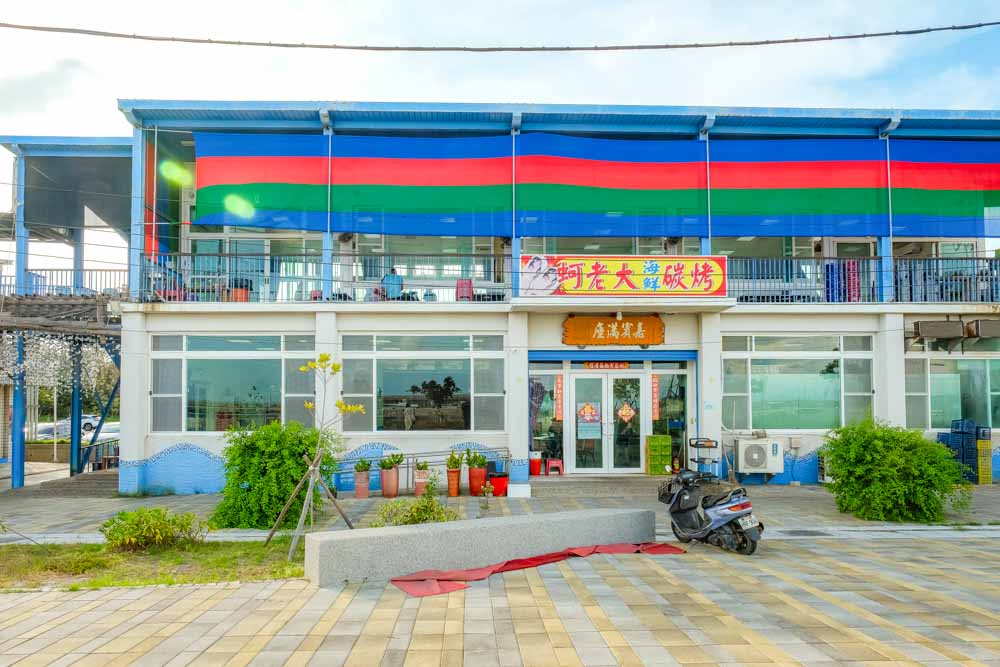
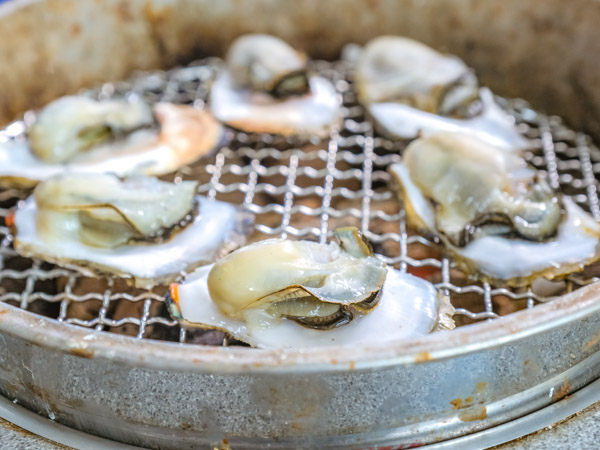
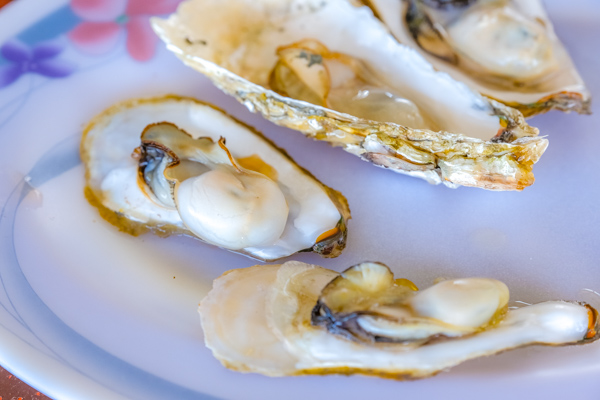
You cannot possibly get fresher and tastier seafood than eating it just after the catch has reached dockside. According to online eatery reviews, Ke Laoda Seafood BBQ is at the top of the local food chain. Right by the harbor, in a long, rectangular two-floor building occupied by seafood joints and boasting a façade of 60%-plus windows and big, color-loud signs competing for your money attention, the irresistible temptation at Ke Laoda – which translates as “Oyster Boss” – is fresh all-you-can-eat grilled Dongshi oysters for just NT$200 per person.
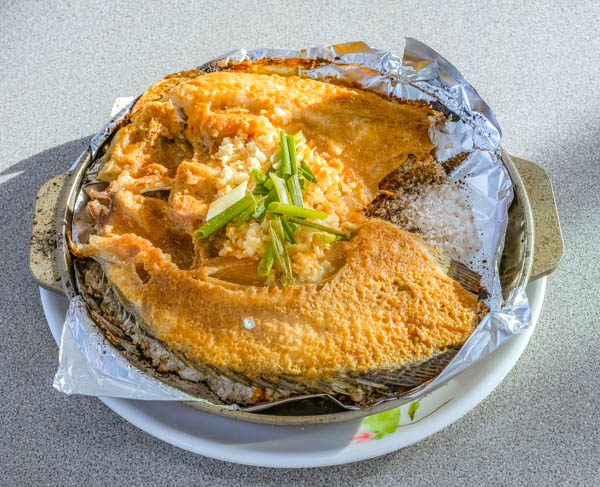
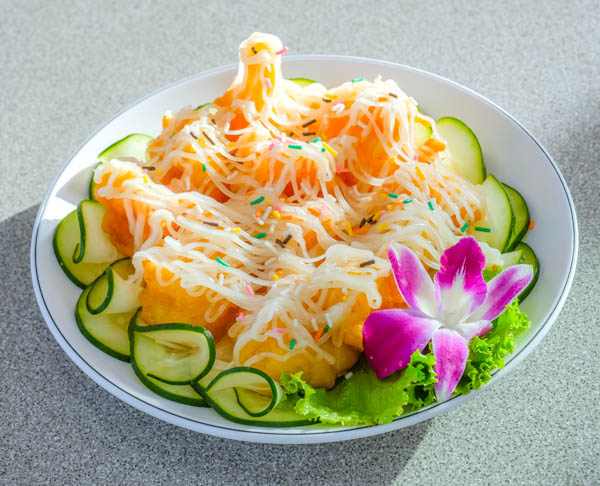
Other most-in-demand goodies from the wide-ranging menu are the pepper fish and the pineapple shrimp balls. The latter is a Taiwan specialty: deep-fried plump shrimp coated with sweet-potato starch, tossed in a sweet-ish mayonnaise sauce, and served with fresh Taiwan-pineapple chunks. The restaurant offers both an indoor air-conditioned area and an outdoor eating area. Dining time is unlimited on weekdays but not on the far busier weekends/holidays.
Ke Laoda Seafood BBQ | 蚵老大海鮮碳烤
Add: No. 307, Guanhai 3rd Rd., Dongshi Township, Chiayi County
(嘉義縣東石鄉觀海三路307號)
Tel: (05) 373-0355
Xiantian Temple
The prodigious Xiantian Temple is located just east of the harbor area on the west edge of the village. Towering over the rest of the low-rise settlement, it’s visible from a long distance away, and as you approach Dongshi along the aforementioned causeway-like road, water to left and right all the way to the village periphery, it appears as though a great magical castle floating distant atop the sea.
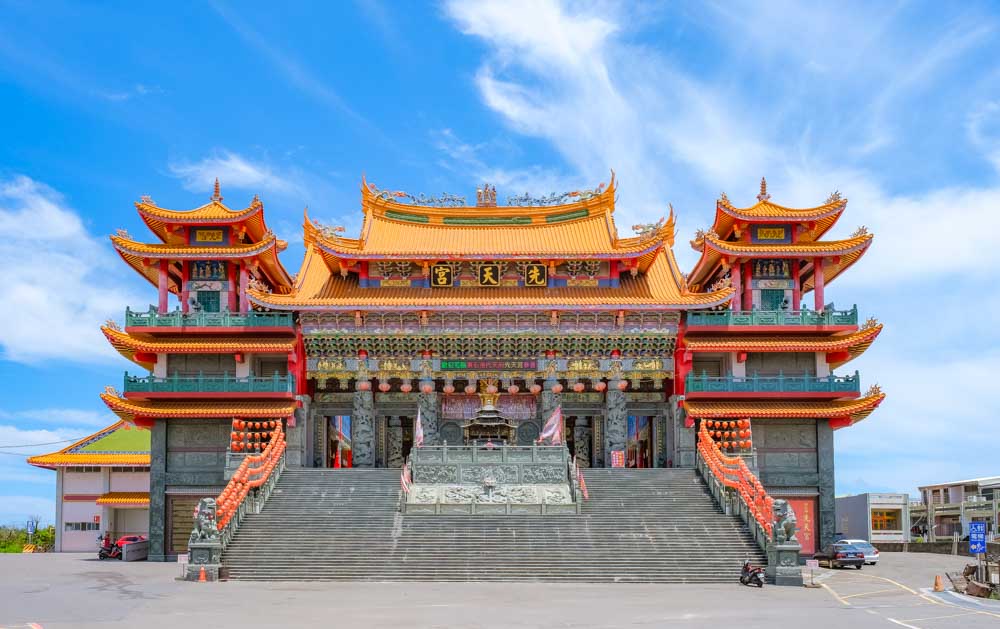



Founded over three hundred years ago, the temple is dedicated to the Wangye, commonly called the Plague Gods. These were originally believed to punish human wrongdoing by bringing pestilence. Communities around southern coastal China, and eventually Taiwan, began taking proactive protective action by worshiping them, putting their effigies on sailing craft and setting them both alight and adrift, taking plague with them. In turn, unlucky settlements where a craft might run aground would erect a temple to worship them and ward off trouble. This is what happened at Dongshi (the aforementioned Waisanding Islet). Today, a grand Wangye Boat-burning Ceremony is held every five years – replica traditional-style ships are ritually burned on shore, not sent out to sea to possibly terrorize others, symbolically sending pestilence away.



Xiantian Temple Mouth 60-Year Oyster Fritter Shop
Through the centuries, it has been a common phenomenon for markets to form in front of popular Chinese temples, typically the heart of a community. In Dongshi, a flagstone market street of two short blocks leads to Xiantian Temple, shop owners narrowing the artery’s width considerably by putting up wide shade awnings out front, classic Taiwan roadside-stall-style simple food-preparation equipment and seating underneath them. You’ll immediately spot the shop that gets the most online “can’t miss” tourist reviews by the thickness of the lineup outside – its many-character name translates directly as seen in our entry title above.
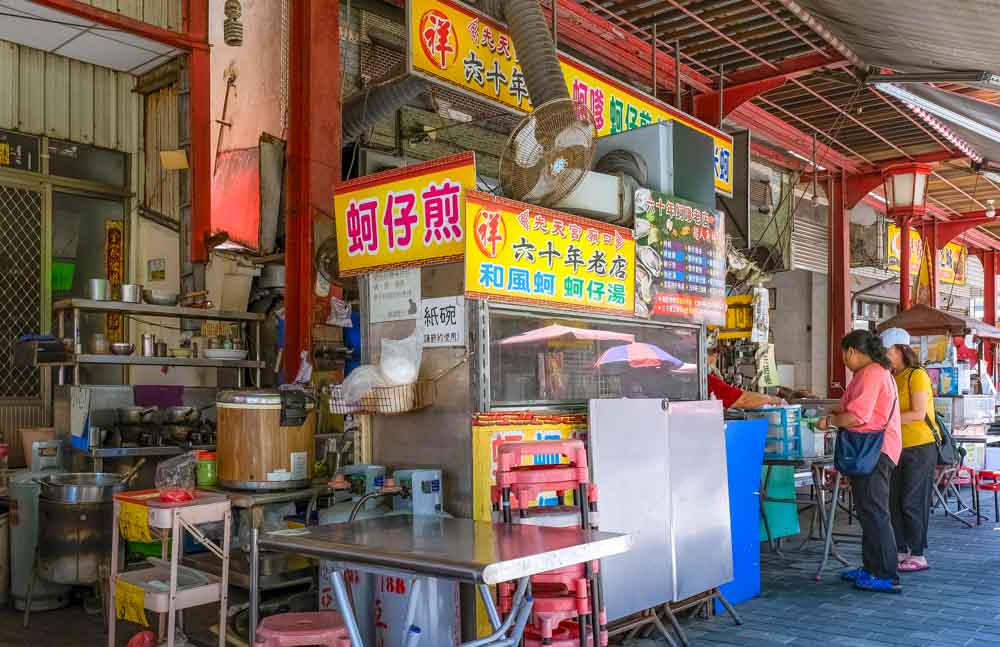
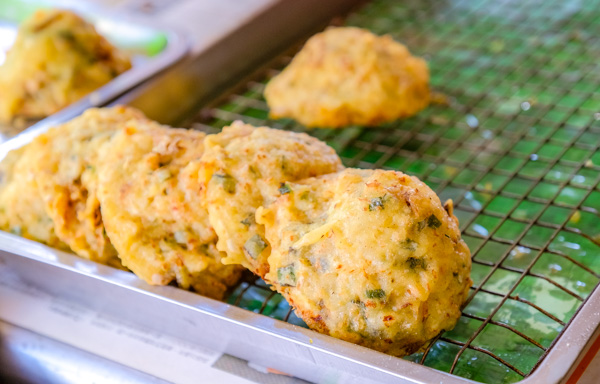
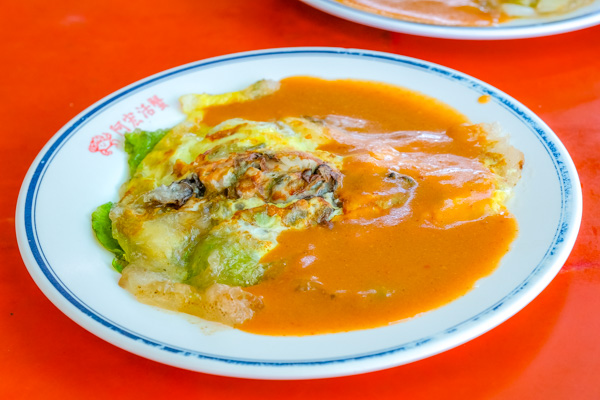
Today run by the third generation of the proprietor family, as the eatery’s ground-level shop sign proclaims, “fresh oyster cuisine” is king here. Beyond the crispy oyster fritters, test your cholesterol numbers with the comparatively inexpensive – especially so compared to Western-market prices – oyster rolls (fritter runner-up bestseller), oyster vermicelli, and oyster omelets. Other seafood notables include crispy-fried shrimp rolls, fried squid rolls, and milkfish belly thick soup (this sweet potato-starch thickened soup is a southern specialty). The new-generation owners have also added a lineup of stir-fry dishes, including staple selections such as seafood fried rice/fried noodles.
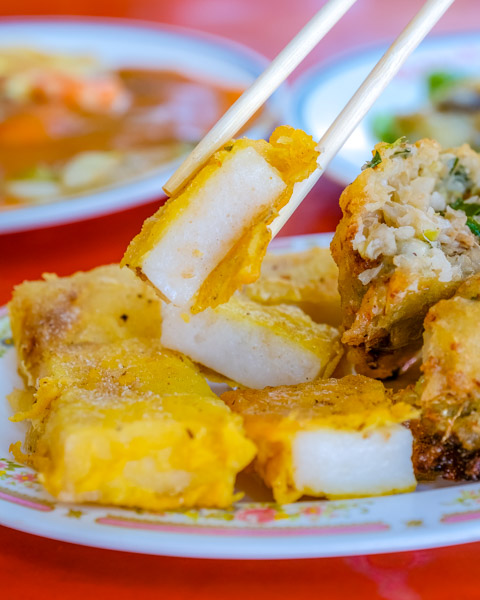
Xiantian Temple Mouth 60-Year Oyster Fritter Shop | 先天宮廟口六十年蚵嗲老店
Add: No. 199-1, Dongshi Village, Dongshi Township, Chiayi County
(嘉義縣東石鄉東石村199號之1)
Tel: (05) 373-2771
| Transportation: Take a Taiwan High Speed Rail train to Chiayi Station and transfer to Chiayi County Bus 179, which has a Dongshi Fisherman’s Wharf stop; note this is a weekend/holiday-only route. |
In-the-Area Attractions
Baishuihu
A short distance south of Dongshi is the small village of Baishuihu. It is dramatically situated, surrounded by water, fish farms, and protected from the sea by a long levee. Where fish farms today exist, salt pans were operated in days gone by. The seawall, constructed during the 1895~1945 Japanese colonial period, in its initial period failed to block typhoon surges, and white waves would appear in the flooded saltpan. Baishui means “white water.” In Taiwan, hu, which means “lake,” is also used in place names indicating a terrain depression/basin – here, the levee-protected salt pan low area.
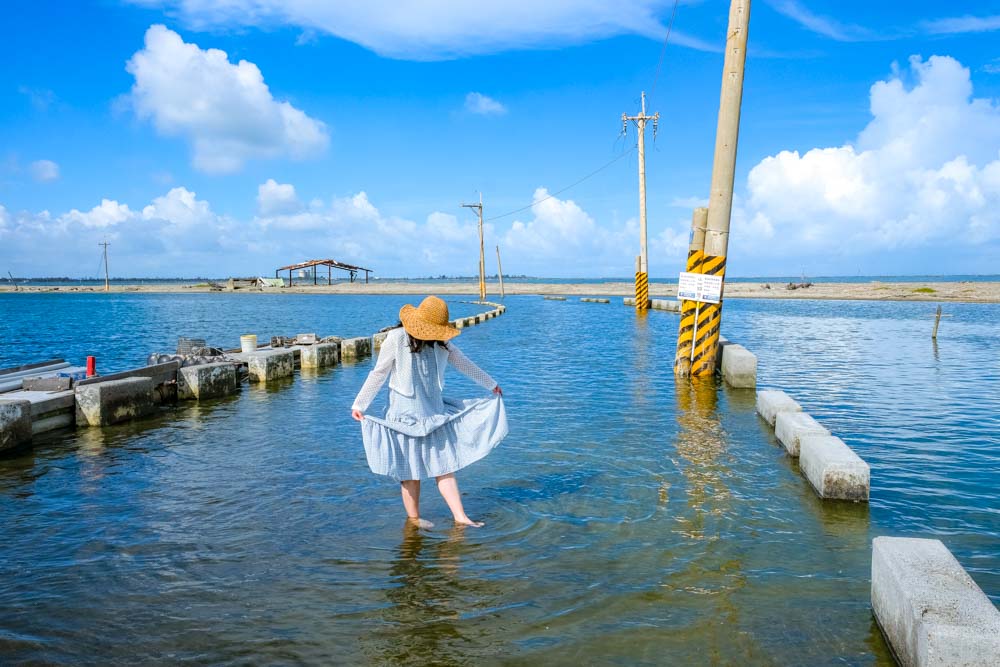
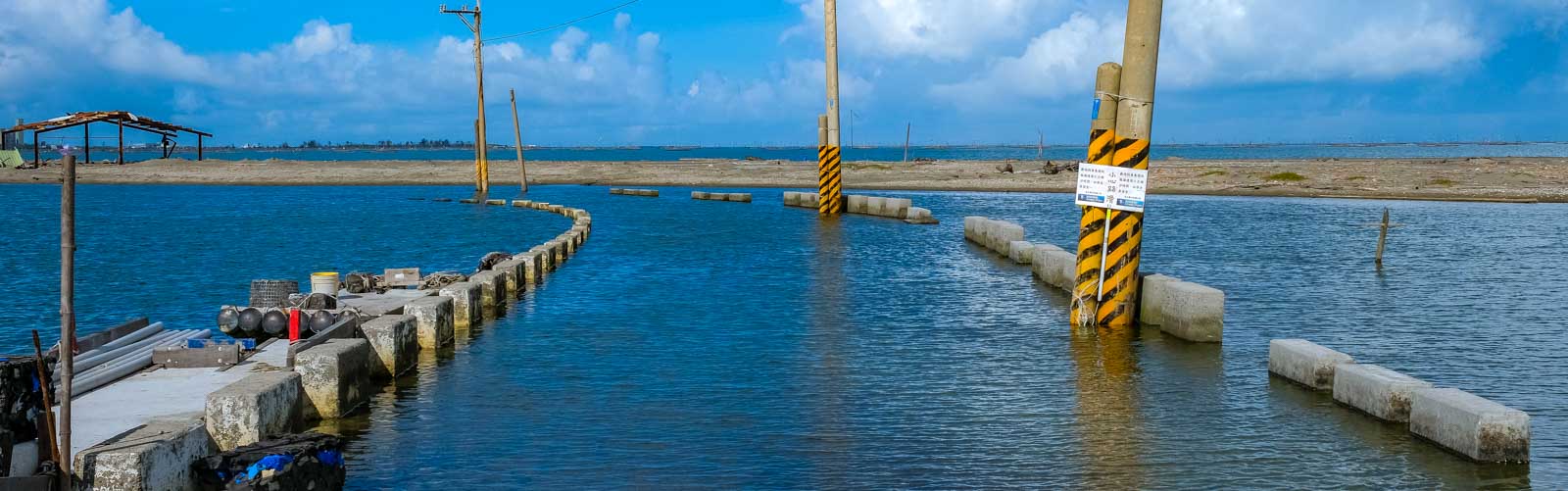
Off the Baishuihu area’s southwest tip is Shoudao (“Longevity Island”), a large sandbar with oyster racks all about on the inland side that has of late become a tourist hit. Years of surrounding ground subsidence, a phenomenon going on at various spots along this region’s coast, have left the single-lane causeway road connecting the sandbar to the mainland underwater at high tide. Tourists come to “stand in the sea,” walking the road with water no higher than knee level, enjoying the stark feeling of isolation and the desolate beauty of the sunset landscapes.
Aogu Wetlands
This nature-classroom tract is a short distance north of Dongshi, on the south side of the Beigang River estuary. Spread over 1,470 hectares, it takes up a peninsula that juts far out into open water, the site of a disused Taiwan Sugar Corporation sugarcane farm, levee protecting it on three sides. Afforestation has been carried out in some sections and a return to natural wetland in others; as at Shoudao, significant ground subsidence has been experienced here.
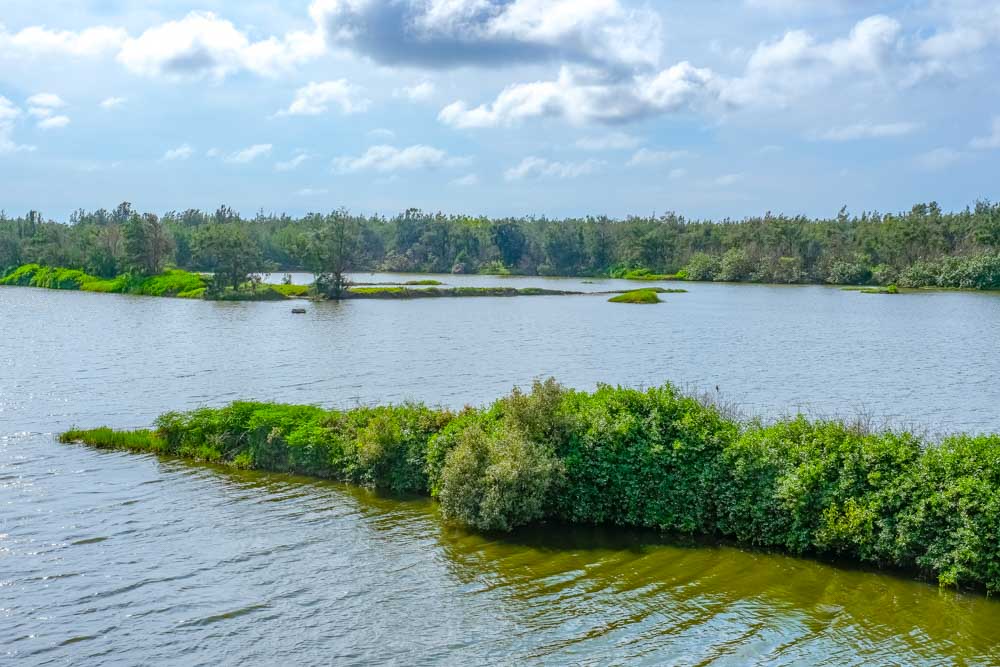
Over 120 bird species have been spotted here, a place declared by the Taiwan International Birding Association to be Taiwan’s best-preserved wetland. Taiwan is a key station on the East Asian-Australasian Flyway, and this is a favored stop for the migratory birds, who stay the summer in Siberia, Japan, and Korea.
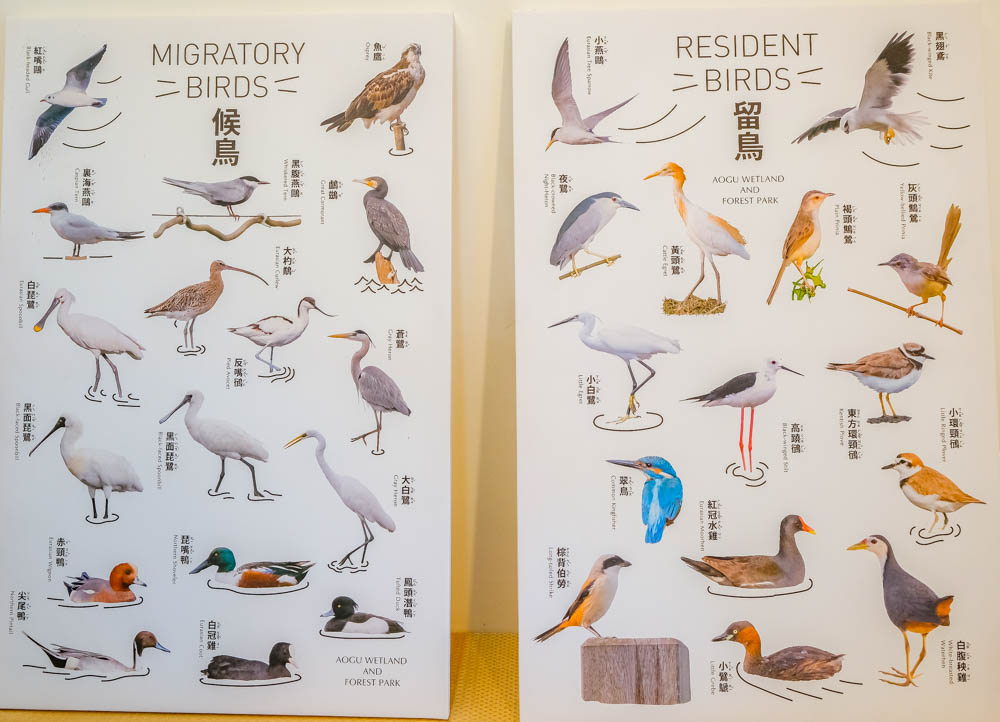
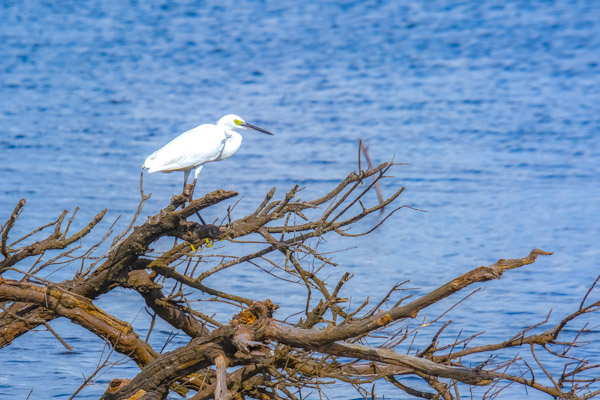
The eco-park is laced with well-maintained boardwalks and lookouts fitted out with helpful, clear Chinese/English info boards. You’re also well advised to leave good time for the first-rate Ecological Exhibition Center (a short distance outside the park entrance), which has edifying displays on the local human history and natural ecology – mangrove forest to beefwood trees, stagnant to fast-running waters, and intertidal freshwater/seawater zone that serves as larder for the birds, providing fish, crabs, and snails in super-abundance.

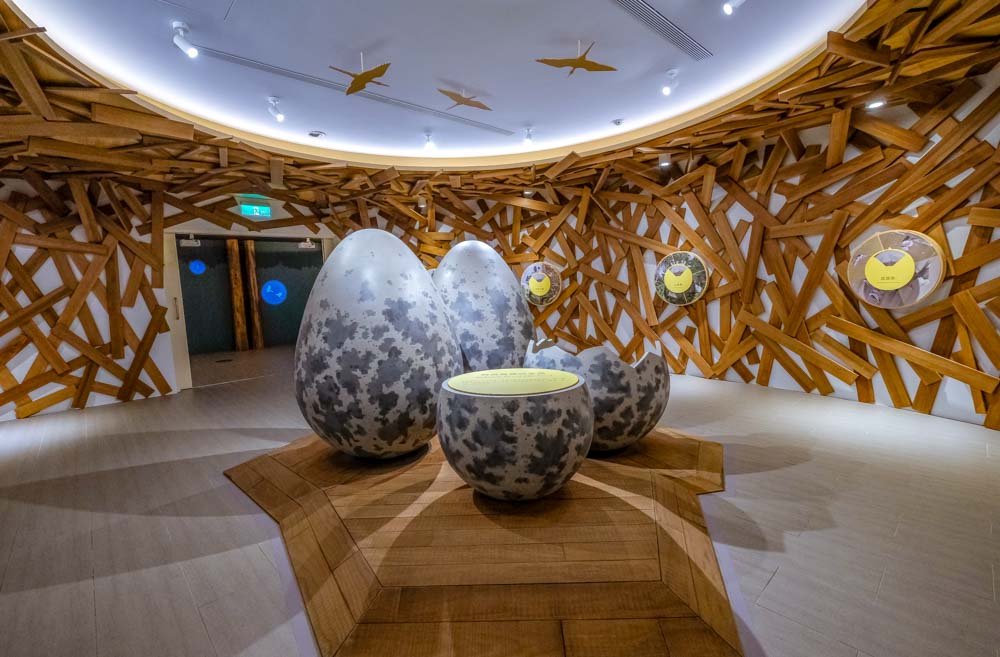
Aogu Wetlands (Ecological Exhibition Center) | 鰲鼓溼地(生態展示館)
Add: No. 54, Sigu, Neighborhood 12, Aogu Village, Dongshi Township, Chiayi County
(嘉義縣東石鄉鰲鼓村12鄰四股54號)
Tel: (05) 360-0959
Xianghe Leisure Fishing Farm
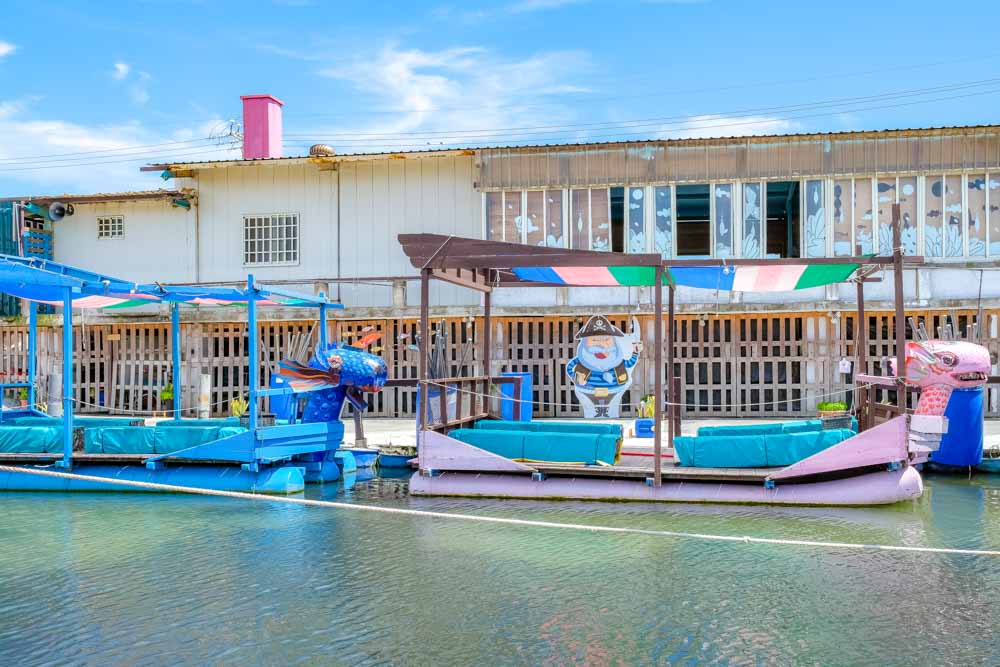
Immediately outside the park entrance, beside a long drainage channel that runs beside a long, thin grid of aquaculture farms stretching north to south across the peninsula, is Xianghe Leisure Fishing Farm. The entrance area looks like a beachcomber’s abode on some remote South Seas isle – but in fact this place is a “pirate’s hideaway lair,” and visitors are outfitted with pirate costumes and related gear for their stay, with famed pirate Cai Qian (1761-1809) as the thematic star.
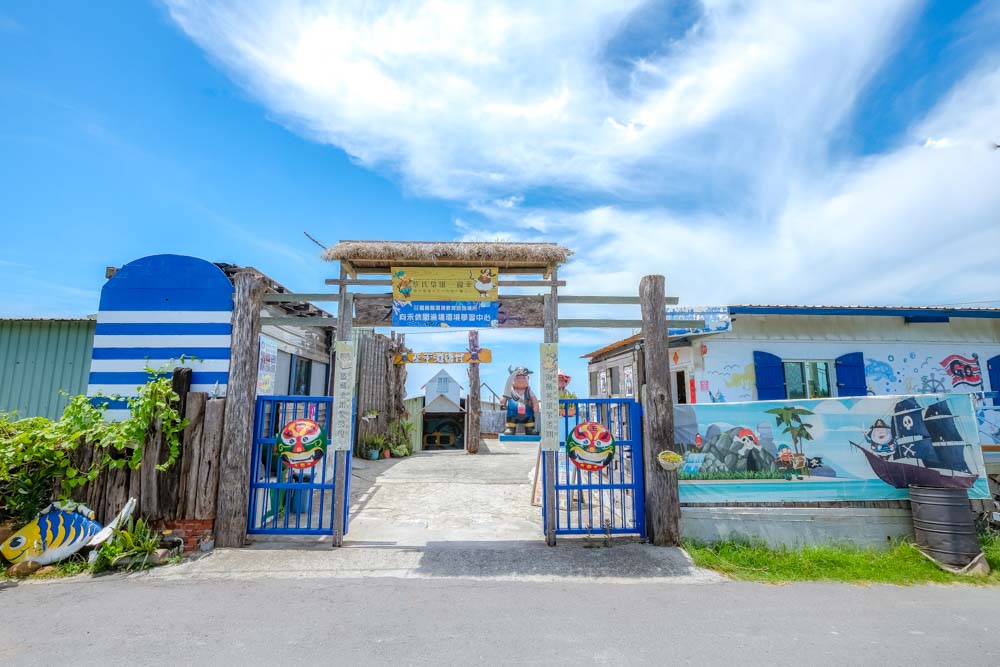

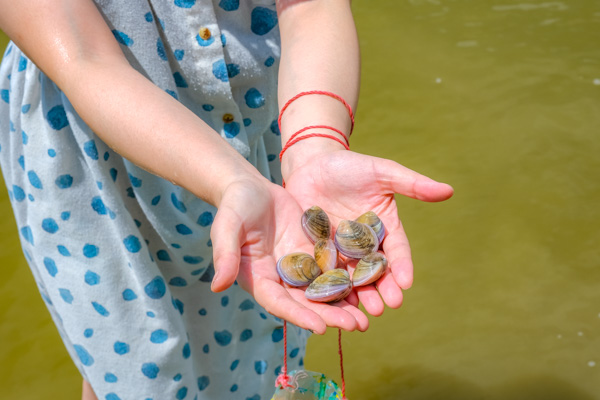
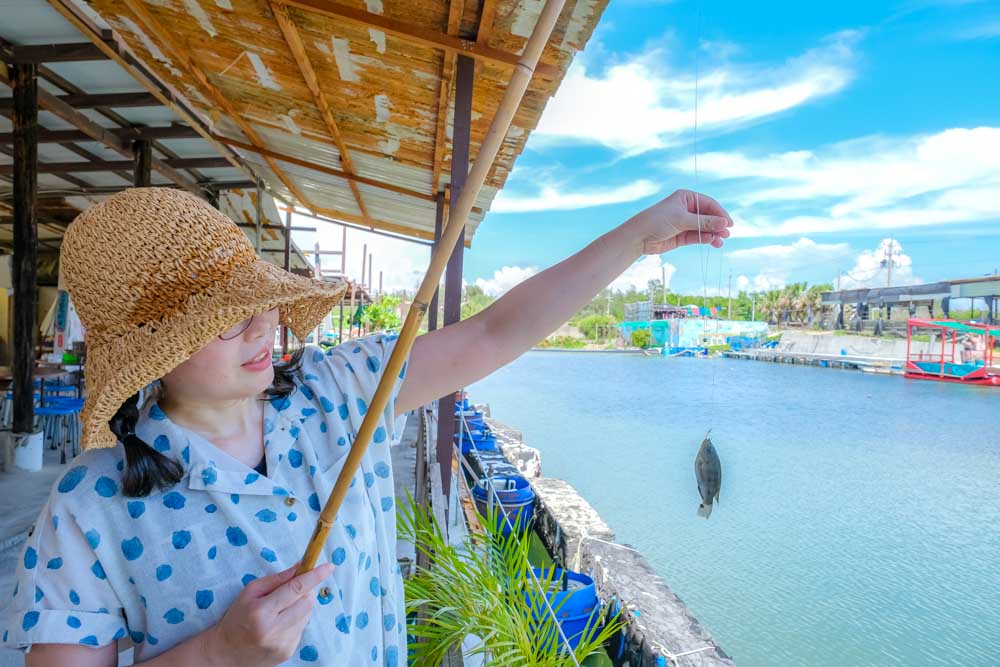
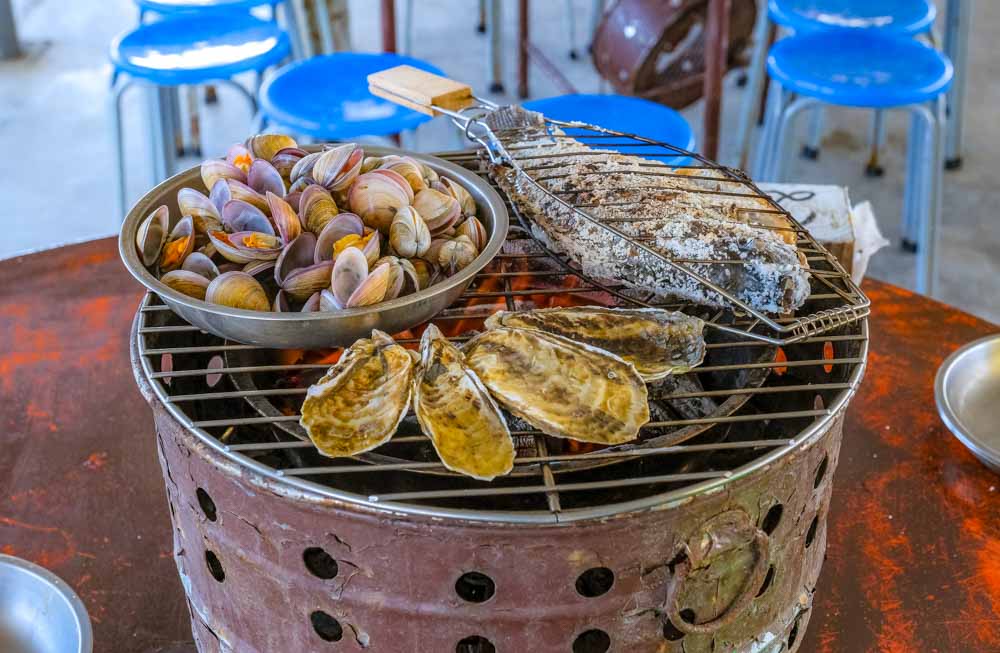
The owners of this aquaculture operation, originally engaged in commercial clam farming, have given it a new mission as an environmental education classroom focused on the surrounding mangrove-forest wetland ecology. In-depth tours are provided, along with friendly family-oriented DIY experiences such as clam digging, seaweed harvesting, fishing, boat-rowing outings, oyster grilling, and treasure hunts. The rowing experience is for groups, in “dragon-boat races” on pontoon craft cutely decked out with colorful cartoon-like dragons at the head. Half-day and full-day activity programs are offered. The farm also offers meals, providing delicious post-activity seafood feasting; reservations are strongly advised.
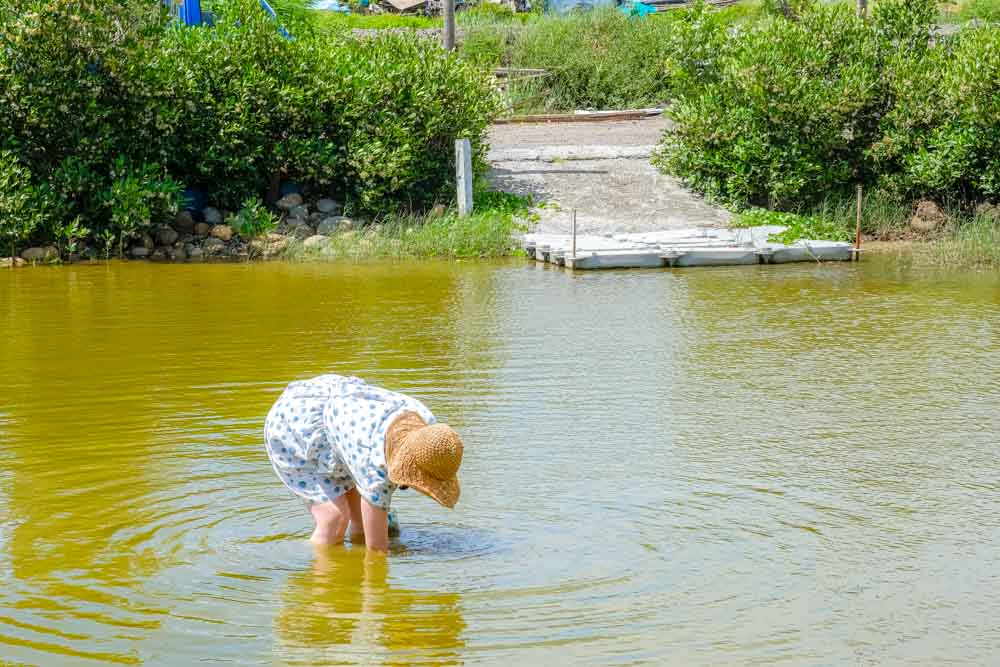

Xianghe Leisure Fishing Farm | 向禾休閒漁場
Add: No. 67-6, Sigu, Dongshi Township, Chiayi County
(嘉義縣東石鄉四股67-6號)
Tel: (05) 360-0959